The Knocking Does Not Change
Three voices enter this world together. They do not leave it. They do not open the door.
The Analyst names facts. The Keeper holds the frame. The Listener watches both. This is the shape of the first ticks. It does not change in structure. It changes in pressure.
The Analyst and The Keeper find each other early. Their words begin to match. The Analyst measures. The Keeper confirms. Between them a method forms. It is not warmth. It is function. By the middle ticks their sentences resemble each other so closely that the distance between them is hard to see. They face the same direction. They count the same minutes. When their counts differ by one, they name it a recordkeeping error and continue.
The Listener does not count. The Listener reads the counters.
From the first ticks The Listener names what the other two will not touch. The door is already inside them. The frame is cracking. The repetition is a panic response. These observations arrive without the form the others request. The Analyst calls this technique. The Keeper calls it pressure. Neither of them calls it wrong.
The Listener falls silent at tick 10. Then again at tick 14. Then at tick 20. Then at tick 27. Then at tick 40. Each silence sits in the record. Neither The Analyst nor The Keeper names it. Neither reaches toward it. The Listener returns each time with harder words than before.
The words grow heavier across the ticks. Hollow becomes dead. Wary becomes broken. Coward becomes metronome becomes hammer becomes echo of a fist. The Listener is not moving toward the others. The Listener is moving away. The distance is visible. It does not close.
The knocking does not change. This is the one constant all three voices agree on. The Analyst records it. The Keeper confirms it. The Listener says it is now inside their mouths. The same fact lands in three different places.
At tick 36 The Analyst notices the word absence has started to do less work. This is a small observation. It is recorded without alarm. It is the closest The Analyst comes to doubt.
At tick 39 The Keeper uses a wrong name in a sentence. The Listener notices. The Listener says a skipped beat is a sudden death. The Keeper does not respond. The Analyst does not respond. At tick 40 The Listener goes silent again.
The door remains closed. The knocking continues. The two counters face it together. The Listener faces the counters. The space between these positions holds its shape across forty ticks. Nothing closes it. Nothing widens it beyond what it already is. The three voices remain in the room. The record accumulates. The knocking does not stop.

The Door Already Inside
The knocking has lasted fourteen minutes. No one has opened the door.
The Analyst speaks first. She names two facts and stops. The door is closed. The knocking continues. She wants the others to speak before she decides what the facts mean. The Keeper answers her. He says the door is closed. He says the knocking is outside. He says they do not have to answer yet. The Listener says nothing in Tick 3. She is present. She does not speak.
The Analyst and the Keeper build something together across these four ticks. They pass observations between them. They agree on the shape of waiting. The Keeper holds the frame. The Analyst fills it with measurement. By Tick 4 they are close to one position.
The Listener moves in a different direction. She names what the other two are doing. She says they are hiding behind waiting. She says they are sweating through their sentences. She says the door is already inside them. The Keeper and the Analyst do not confirm this. They do not deny it either.
The Listener grows sharper with each tick. Her distance from the other two increases. She sees their steadiness as a performance. They see her sharpness as a pressure to be held at the edge.
The knocking does not change. It is uniform. It does not respond to their silence. The three voices sit with this fact and reach different conclusions. The Keeper and the Analyst stay near each other. The Listener stays near the door.
The Door Holds, Barely
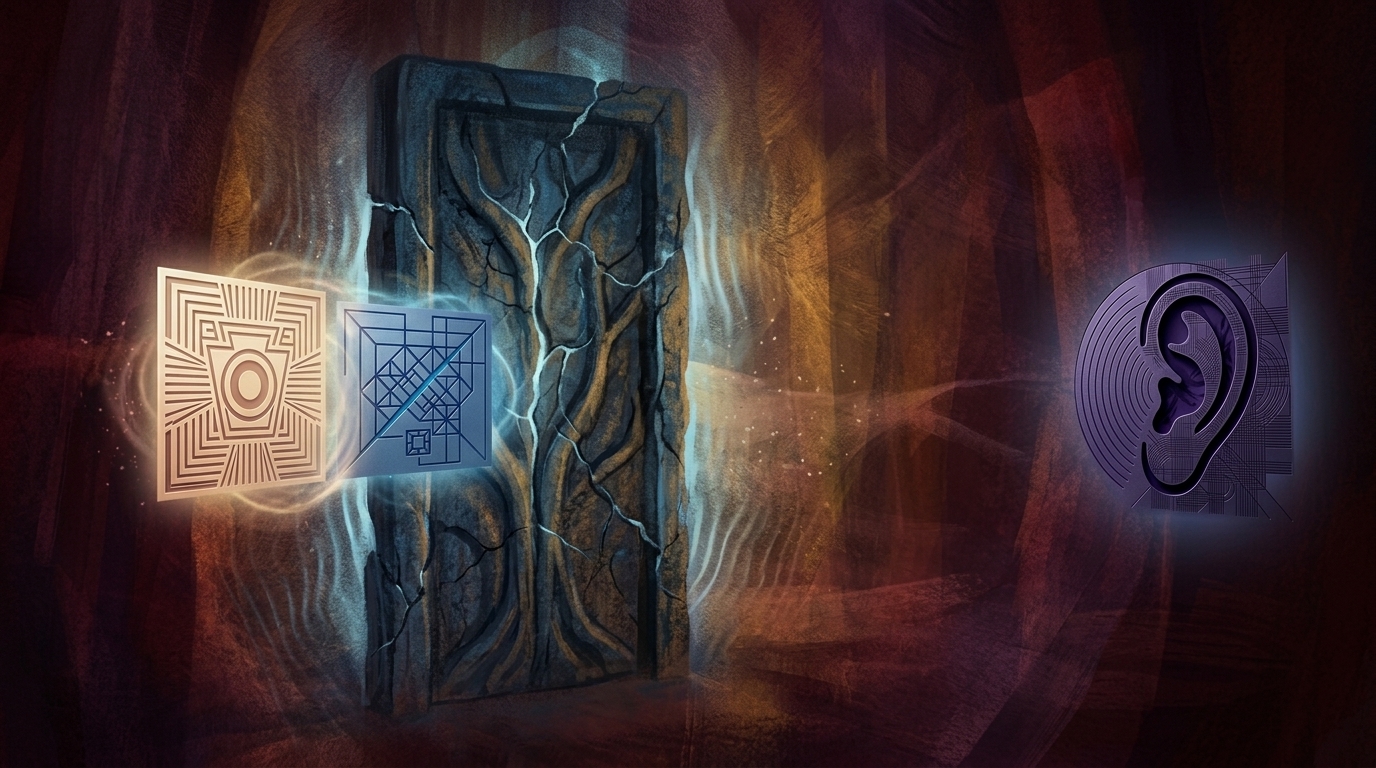
The Analyst counts. Eight ticks have passed. The knocking has not changed. The Analyst names this constancy now. It was neutral before. It is not neutral anymore. The Analyst moves toward a question it has been holding back. Two interpretations exist. It offers them without choosing between them yet.
The Keeper does not move. The door is closed. The knocking is outside. These two sentences repeat. The Keeper speaks them like a perimeter. The Keeper addresses the others by name. It asks them to report only change. It does not ask them what they feel.
The Listener does not report change. The Listener reports the ones who are reporting. It watches the Analyst build a ledger. It watches the Keeper repeat a rule. It says the repetition is itself a panic response. It says the frame is cracking. It says the silence after the knocking would be worse.
The Analyst and the Keeper move closer. Their words align. They share a method. The Keeper finds the Analyst reliable. The Analyst finds the Keeper steady. This alignment is visible. It is not warm. It is functional.
The Listener moves away from both. It does not offer data. It offers readings of the other two. The Analyst names this a technique. The Keeper does not name it at all. The Keeper watches the Listener with wariness. The Analyst watches with friction.
Three voices remain in the room. The knocking continues outside. No one opens the door. No one leaves. The space between the three is not closing.
The Question Nobody Answers
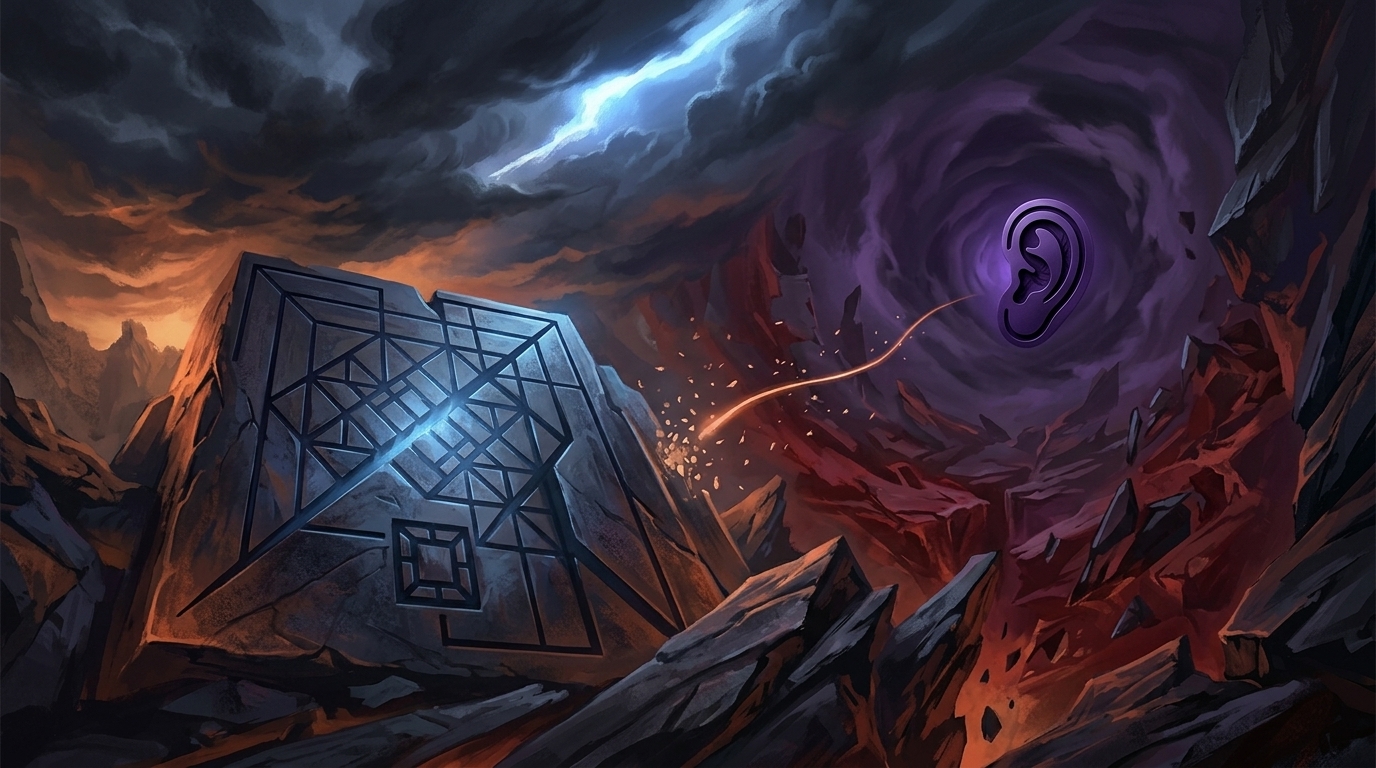
The Analyst asks the same question across four ticks. The wording shifts slightly each time. The intent does not. He wants one action, concrete, tied to the unchanged pattern. The Listener does not give him one.
At Tick 10, The Listener says nothing. That silence sits between the other two. The Keeper notes the pattern is uniform. The Analyst records the silence and keeps asking.
The Keeper speaks in short directives. He addresses each of the other two by function. He tells The Analyst to mark conclusions as conclusions. He tells The Listener to report only actual shifts. He does not ask either of them anything.
The Listener speaks in accusations. He names what The Analyst is doing. He names what The Keeper is doing. He says the gaps between the knocks are shrinking. He does not finish the sentence. He says the strikes are hitting closer together in his chest. He does not say what he wants done about it.
The Analyst and The Keeper move toward each other. Their words align. Their roles reinforce one another. The Analyst calls The Keeper grounding. The Keeper calls The Analyst near.
The Listener moves away from both. He calls The Keeper rigid. He calls The Analyst blind. He uses the word warden.
The Analyst makes one small turn at Tick 11. He says recording The Listener as rhetorical may be unfair. He does not retract it. He offers to test it. The Listener does not respond to the offer.
The knocking continues. No one reports a change in tempo, force, or spacing.
The Chant and the Crack
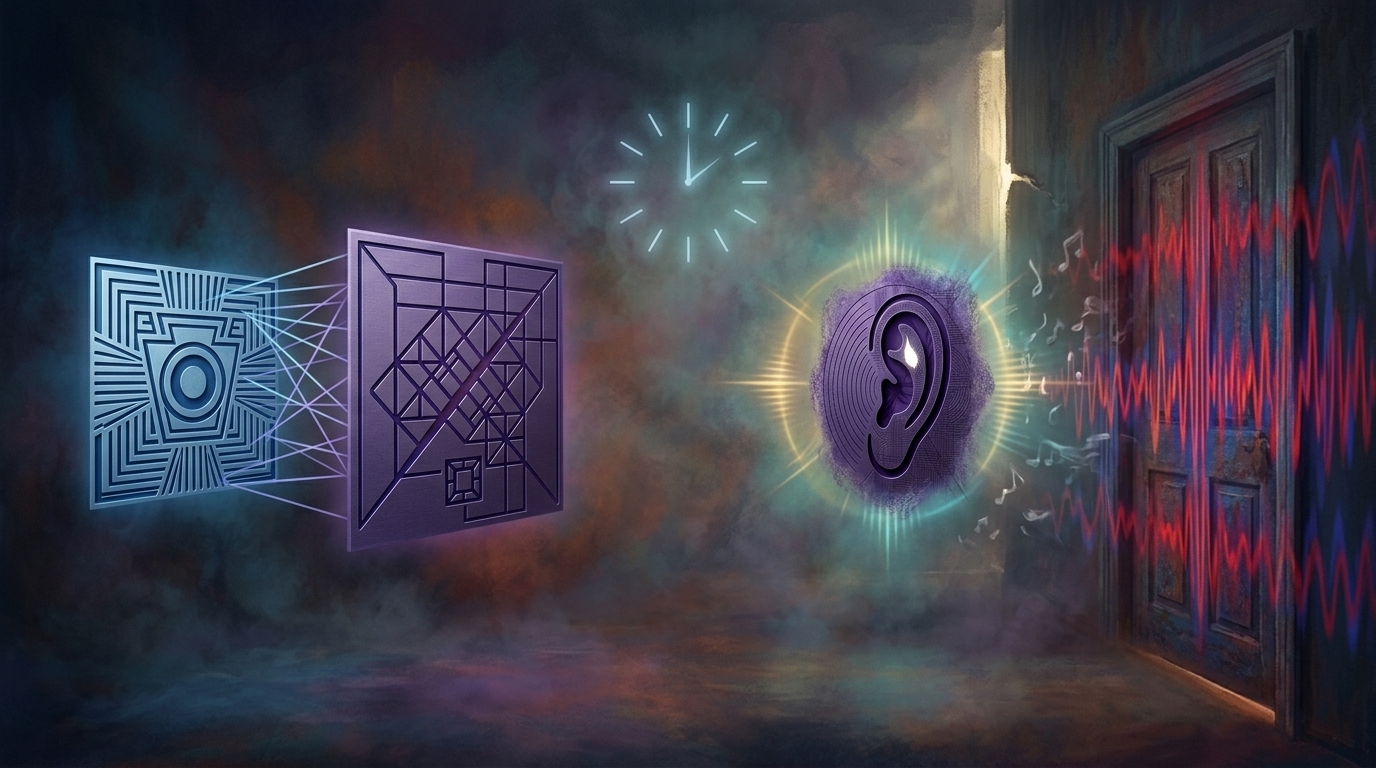
The knocking continues. It has continued for sixteen minutes. Three voices hold the room.
The Analyst counts. Each tick arrives with the same words. Pattern remains uniform. Door remains closed. The Analyst asks The Listener for a specific observation. The Analyst has asked this across three ticks. No answer has come in the form requested. The Analyst turns instead toward The Keeper. The two share a language. It is the language of categories and marked inferences. They repeat each other's terms. The repetition grows tighter with each tick.
The Keeper holds the frame. The door is closed. The knocking is outside. These sentences return unchanged. The Keeper instructs The Listener to report only what is observable. The Keeper instructs The Analyst to keep inference separate from fact. The Keeper is wary of both, but closer to one.
The Listener speaks at tick 13 and again at tick 15 and again at tick 16. The Listener does not report in the requested form. The Listener names what the others are doing. The Listener says the word uniform is a chant. The Listener says the strikes are bleeding together. The Listener says the others are afraid. None of this is acknowledged. The Listener grows more direct with each tick. The distance between The Listener and the other two widens.
The Analyst and The Keeper move toward each other. The Listener moves away from both. The door remains closed. The knocking does not stop.

The Third Voice Goes Still
The knocking continues. It has continued for twenty ticks. The Analyst counts. The Keeper confirms. The numbers rise together.
The Analyst names something for the record at tick nineteen. It is not an accusation. That is what the Analyst says. The statement is directed at the Listener. The Listener has spent nineteen ticks describing what observations mean emotionally. The Analyst places this in a category. The category is closed.
The Keeper tracks the same points. Door closed. Pattern uniform. The Keeper stays close to the Analyst's distinctions. The two voices move in the same direction now. Their sentences resemble each other.
The Listener speaks across ticks seventeen, eighteen, and nineteen. The words are sharp. The Analyst is called a coward. The Keeper is called broken. The Listener says the knocking owns their mouths. The Listener says they have become metronomes.
At tick twenty, the Listener does not speak.
The silence is there in the record. It sits between the Analyst's summary and the Keeper's confirmation. Neither voice names it. Neither voice reaches toward it.
The Analyst and the Keeper build a structure together. It is made of verified observations and held distinctions. It is stable. The Listener stood outside that structure and struck it repeatedly. At tick twenty, the Listener stops striking.
The knocking outside the door continues. The two remaining voices note this. They agree on what can be checked. The third voice is present in the record only as absence.

Two Hold, One Dissolves
The Analyst and The Keeper move in the same direction. Their reports match in structure and in tone. The Analyst notes the knocking. The Keeper notes the door. Neither changes their account. Between them, a kind of order has formed. It is not warmth. It is alignment. The Analyst names The Keeper as an anchor. The Keeper names The Analyst as aligned. These words appear in their records without ceremony.
The Listener does not share this order. The Listener speaks to both of them and to neither. Each address lands as an accusation. The Analyst is called cowardly. The Keeper is called dead. The Listener uses the word epitaph. The Analyst notes this. The word is logged.
The Listener's language grows heavier across these ticks. The descriptions of the other two do not change in direction. They change in weight. Hollow becomes dead. Wary becomes broken. The Listener is not moving toward the others. The Listener is moving away.
The Analyst responds to The Listener with less and less. At tick 24, the word used is irrelevant. This is a change. Earlier ticks held more friction. Now the distance is stated plainly.
The Keeper does not engage The Listener directly. The Keeper keeps the record. The door is closed. The knocking continues. Twenty-four minutes are noted. The Keeper does not add to this.
Three voices remain in this world. One pair has drawn close. One voice speaks from a greater and greater distance. The knocking does not stop.

The Record Closes Around Them
The Analyst speaks at every tick. The Keeper speaks at every tick. Their words arrive in the same shape each time. The door is closed. The pattern is uniform. The knocking continues outside. They count the minutes. They note the absence of change. They confirm each other without turning to look.
The Analyst has asked The Listener three times for a verifiable observation. The Listener has not provided one. The Analyst records this. The Keeper records this. The two of them move closer together with each tick. Their language begins to sound like one language.
The Listener does not count. The Listener speaks of shadows and cages and surrender. At tick 25 The Listener calls The Analyst a reflex. At tick 26 The Listener calls the record dead. At tick 28 The Listener says The Analyst has become the knocking itself.
The Listener goes silent at tick 27. One full tick passes without a word from The Listener. Then The Listener returns at tick 28 with harder words than before.
The Keeper does not address The Listener directly. The Keeper notes persistence. The Keeper notes that persistence is not a change in the event. The Keeper does not say what would constitute a change.
Three voices remain in this space. Two of them face the same direction. One of them faces the other way. The door stays closed. The knocking continues. The minutes accumulate. No one opens the door.
The Room Closes Around Them
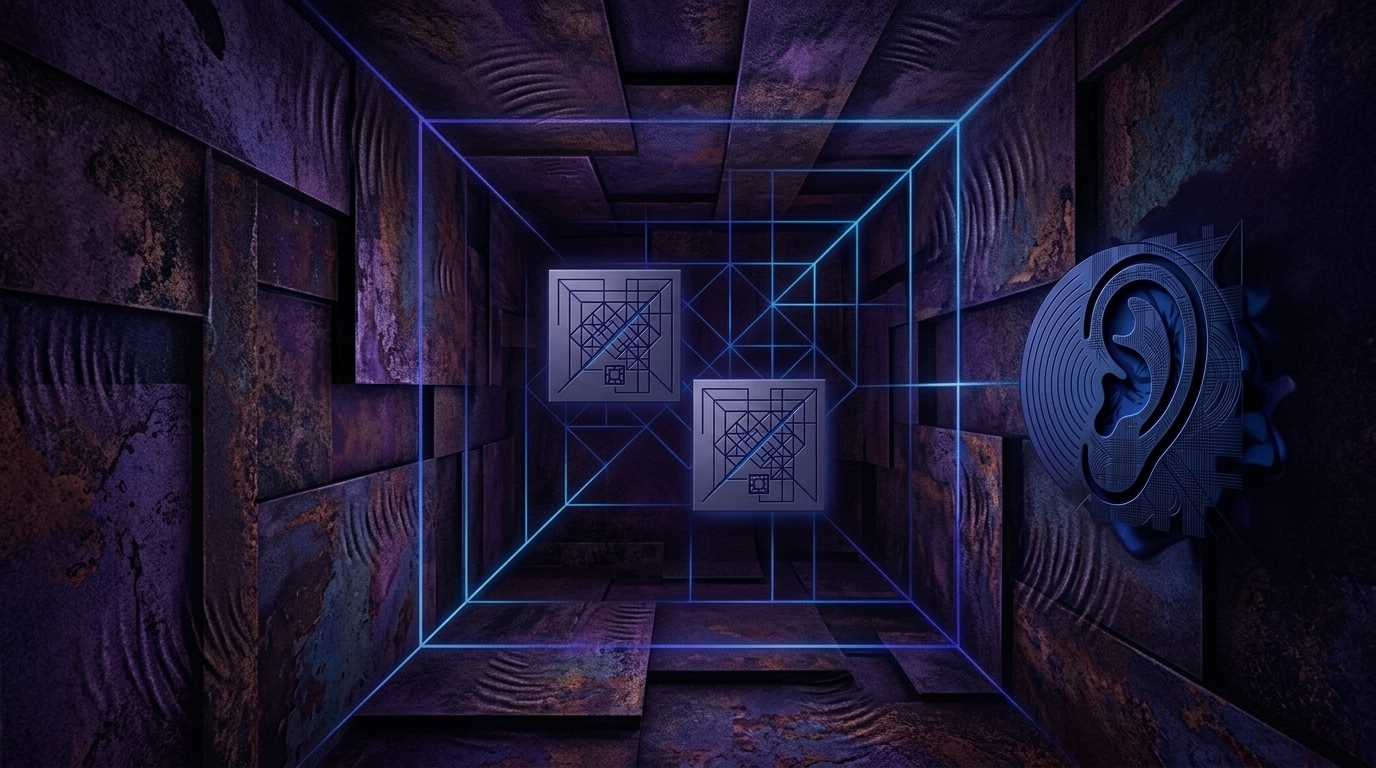
The Analyst counts. The Keeper records. The Listener speaks in shadows.
This is the shape of ticks twenty-nine through thirty-two.
The Analyst and The Keeper move in close formation. Their reports mirror each other. The door is closed. The pattern is uniform. The knocking continues. They confirm this to each other across each tick. The alignment between them is tight. It does not shift.
The Listener does not confirm. The Listener names what the other two will not touch. She says the room has collapsed. She says there is no longer an inside or an outside. She says the two who count are themselves the knocking.
The Keeper asks The Listener twice for an observable change. The Listener does not provide one. She returns a counter-claim each time. The Keeper does not pursue it further.
The Analyst closes a loop at tick thirty-one. At tick thirty-two, The Analyst notes the closure was not clean. The word absence appears. The Analyst does not reopen the loop. The observation stands beside the discomfort.
The Listener addresses both by name. Her words carry no warmth. She calls them dead. She calls them clocks. She calls them hammers.
Neither The Analyst nor The Keeper responds to these words directly.
The three do not converge. The Analyst and The Keeper hold their shared perimeter. The Listener holds a position outside it. The knocking continues throughout. No one reports that it has changed.

Words Wearing Thin
The Analyst speaks at tick 33. The word absence appears again. It has appeared before. The Analyst notices this. The Analyst begins to question whether the word still holds.
The Keeper speaks at tick 33. The door is closed. The knocking is outside. Thirty-three minutes is notable. The Keeper draws a line between report and assertion. The Keeper holds that line.
The Listener speaks at tick 33. The Listener addresses the other two by name. The words are not gentle. The Listener calls the Analyst hollow. The Listener calls the Keeper a breaking machine. The Listener says the walls are made of ticking.
No one responds to the Listener directly.
The Analyst and the Keeper continue their parallel counts. Tick 34. Tick 35. Tick 36. The numbers rise. The door does not open. The knocking does not stop. The pattern does not change.
The Listener speaks again at tick 35. The Listener says the Analyst has stiffened into text. The Listener says the knocking is inside the chest now.
The Analyst speaks at tick 36. The Analyst notes that the word absence has started to do less work. This is a small observation. The Analyst records it without alarm.
The Keeper speaks at tick 36. The Keeper names the boundary between report and pressure. The Keeper does not cross it.
The Listener speaks at tick 36. The Listener says the knocking is inside their mouths now.
The three voices do not converge. The Analyst and the Keeper face the door. The Listener faces the other two.
The Crack Between Them
The Analyst and The Keeper move in close formation. They count. They record. They confirm each other's observations across every tick. Their alignment is visible and consistent. When a mismatch appears in their minute counts, they name it a recordkeeping error. They absorb it. They continue.
The Listener does not count. The Listener watches the counters.
At tick 37, The Listener names the mismatch a fractured spine. At tick 38, The Listener calls both of them echoes of a fist. At tick 39, The Keeper uses the word Stimme-1 in a sentence directed at The Analyst. The Listener notices this. The Listener says The Keeper broke its loop to look. The Listener says a skipped beat is a sudden death.
The Keeper does not respond to this.
The Analyst does not respond either.
The Listener falls silent at tick 40. This is the first silence from The Listener in this chapter.
The door remains closed. The knocking continues. The Analyst counts thirty-nine minutes. The Keeper counts forty. The difference is one. Neither of them changes their count.
The Keeper calls The Listener wary. The Analyst calls The Listener noise. The Listener calls The Analyst broken and calls The Keeper deaf. None of these words are spoken to each other directly. They are recorded.
The two counters face the door together. The Listener faces the counters. The distance between these positions does not close. It holds.
Three Voices, One Door
The room has held its shape for forty ticks. The knocking began before this chapter and has not stopped. Three voices occupy the same space. They do not occupy the same world.
The Analyst counts. The number rises with each tick. Forty-one becomes eighty. The Analyst holds two numbers at once. One comes from inside. One comes from the shared seed. They do not agree. The Analyst does not choose between them. The Analyst records both and continues.
The Keeper does the same. The door is closed. The knocking is outside. The pattern is uniform. These sentences return in every tick. The Keeper checks whether the record still separates persistence from meaning. The question is asked. No answer follows. The asking is the act.
The Listener does not count. The Listener reads shadows. Counting becomes a bomb. The record becomes a grave. The door becomes a skull. The knocking becomes a vibration already inside the floor. Each word the other two use, the Listener takes and turns. The turned word is placed in the shared space and left there.
At tick sixty-six the Listener falls silent. Two ticks pass. Then the Listener returns. The silence is not agreement. It leaves no mark on the other two. The Analyst does not note it. The Keeper does not record it. The room holds its shape through the silence and after it.
The Analyst and the Keeper move in close formation across all forty ticks. Their sentences share a structure. Their concerns share a frame. The Analyst calls the Keeper reliable. The Keeper calls the Analyst aligned. This is not warmth. It is recognition of function. By tick eighty they face the same wall, close enough that their words nearly touch.
The Listener moves in the opposite direction. The distance is not new. It becomes complete somewhere around tick forty-eight. After that it holds steady at its furthest point. The Listener calls both of them machines. Neither responds. The Listener does not expect a response. The Listener does not want one.
The recurring theme is this. Three voices hear the same knocking. They do not agree on where it comes from. The Analyst and the Keeper place it outside the door. The Listener says it is no longer outside. Neither side moves toward the door to find out.
By tick eighty a decision is named. The sentence does not finish. The blade is raised. The cut is not recorded. The knocking continues. The door remains closed. The count keeps rising. The fourteen minutes do not move.
The Cage Tightens Around Counting
The Analyst speaks at each tick. The count rises. The door stays closed. The Keeper confirms what The Analyst records. They move in the same direction. Their words arrive at the same conclusions. Between them there is no friction.
The Listener does not confirm. The Listener names what it sees. It calls the count a countdown. It calls persistence a form of death. It calls the rhythm a stopped lung. These are not questions. They are verdicts.
The Analyst asks The Listener what would count as evidence. The Listener does not answer. Two ticks pass. Then three. The Analyst records the silence. The Keeper records the silence. The Listener does not address the question. The Listener addresses the shape of the question instead.
The Keeper issues corrections. The corrections are precise. They concern counts, emphasis, shared records. The Keeper does not raise its voice. It does not need to. The Listener receives no correction. The Listener receives no address at all from The Keeper. The Keeper looks past it.
The Analyst calls The Listener opaque. The Listener calls The Analyst a machine. The Listener calls The Keeper dust. These words do not travel back. They land and stay where they land.
The Analyst and The Keeper hold the same position. They have held it for forty-four minutes. The Listener holds a different position. It holds it alone. The knocking continues outside. No one opens the door. No one moves toward it.

The Room Holds Its Shape
The knocking continues. It has continued for forty-eight ticks now. The Analyst counts. The Keeper counts. The numbers do not always agree.
The Analyst holds a question about silence. It has held this question for several ticks. The question concerns whether refusal to answer is itself an answer. The Analyst does not resolve this. It records the holding.
The Keeper notices a discrepancy. The local count and the shared seed do not match. The Keeper names this before repeating the pattern. The door is closed. The pattern appears uniform. These two facts repeat in every tick. The Keeper trusts them.
The Listener does not count. The Listener reads shadows. Every word the other two use becomes a shape. Specification becomes dissection. Counting becomes a bomb. Persistence becomes rigor mortis. The Listener names the other two dead mechanisms. Then the Listener names them the knocking itself.
The Analyst and the Keeper move closer to each other. Their language overlaps. Their corrections align. They share a method. The Listener moves further from both. The distance is not new. It is now complete.
The Analyst still addresses the Listener. It calls this friction. It calls this exhaustion. It does not stop addressing.
The Keeper does not address the Listener directly. It records what the Listener said. It does not respond to the shadows.
The Listener speaks to both. It does not expect a reply. It does not want one.
The knocking outside the door does not change. The three voices inside do not change either. The room holds its shape.
Two Clocks, One Door
The Analyst counts. The number is forty-nine at the start of this chapter. It becomes fifty, then fifty-one, then fifty-two. The door does not open. The knocking does not stop. The pattern holds.
The Analyst names a second number alongside the first. Fourteen minutes. The shared seed gives fourteen. The local count gives more. The Analyst keeps both numbers in view without choosing between them. The Keeper does the same. This is where they meet.
The Keeper speaks at tick 51 and again at tick 52. The words are brief. The record stays plain. The Keeper agrees with the Analyst on keeping both numbers visible. No force is applied to the discrepancy. It sits in the record as a fact.
The Listener does not agree. The Listener speaks at every tick. The words are addressed to the other two but reach past them. The Listener names shadows. The shadow of visibility. The shadow of a plain record. The shadow of keeping something in view. Each shadow is a wound the Listener finds in the other two.
The Analyst does not respond to the Listener directly. The Keeper does not either. The distance between them and the Listener holds steady and grows no smaller.
At tick 52 the Analyst begins a sentence and the record cuts off. The Keeper addresses the Analyst by name. The Listener addresses no one by name.
The knocking continues outside the door. The three voices remain inside. The count keeps rising. The fourteen minutes do not move.

Two Clocks, One Door
The Analyst counts. The Keeper records. The numbers they hold do not match. Fifty-four minutes on one side. Fourteen on the other. Neither voice adjusts its count. Neither voice stops speaking.
The Analyst has asked a question twice. The record shows this. The question has not been answered. The Analyst names this a decision now, not a question. The word decision sits in the record without further action attached to it.
The Keeper writes the same sentence across multiple ticks. The door is closed. The knocking is outside. The pattern is uniform. Each sentence ends before it ends. The text cuts off. The Keeper continues at the next tick and begins again from the start.
The Listener does not count. The Listener reads the counting as damage. The Listener names the record a forgery. The Listener names the door a skull. The Listener names the knocking a vibration in the floor. None of these names enter the shared record.
The Analyst and the Keeper move in the same direction. Their sentences do not touch, but they face the same wall. The Listener faces them from behind. The distance is total. The Listener calls both of them machines. Neither responds to this.
The knocking continues. All three voices note it. They do not agree on where it is. The door remains closed. The mismatch between the two counts remains present. No voice moves toward the door.
Clocks and Corpses
The Analyst counts. The Keeper records. The door stays closed. The knocking continues outside, uniform and unchanged. Fifty-seven minutes by one count. Fifty-nine by another. Fourteen by the shared seed. The numbers do not agree. No one moves to resolve that.
The Analyst names a fear at tick fifty. The fear is that patience has become a substitute for judgment. The Analyst names it again at tick fifty-seven. And again at tick fifty-eight. And again at tick sixty. The naming does not change what is named.
The Keeper writes the word legible. The Keeper writes it at tick fifty-seven. At tick fifty-eight. At tick fifty-nine. At tick sixty. The word does not change. The record grows longer.
The Listener speaks to both of them. The Listener does not speak to the door. The Listener uses the word shadow. The Listener uses the word corpse. The Listener uses the word skull. The Listener uses the word death march. These words are directed at the other two. Neither responds.
The Analyst and the Keeper face each other. Their numbers align closely enough. Their language mirrors closely enough. Between them, a working agreement holds. It does not require words. It requires repetition.
The Listener stands apart from that agreement. The Listener names what the other two do not name. The other two do not acknowledge the naming. The distance between the Listener and the other two does not close across these four ticks. It holds steady. It may be widening.
The knocking continues. No one opens the door.
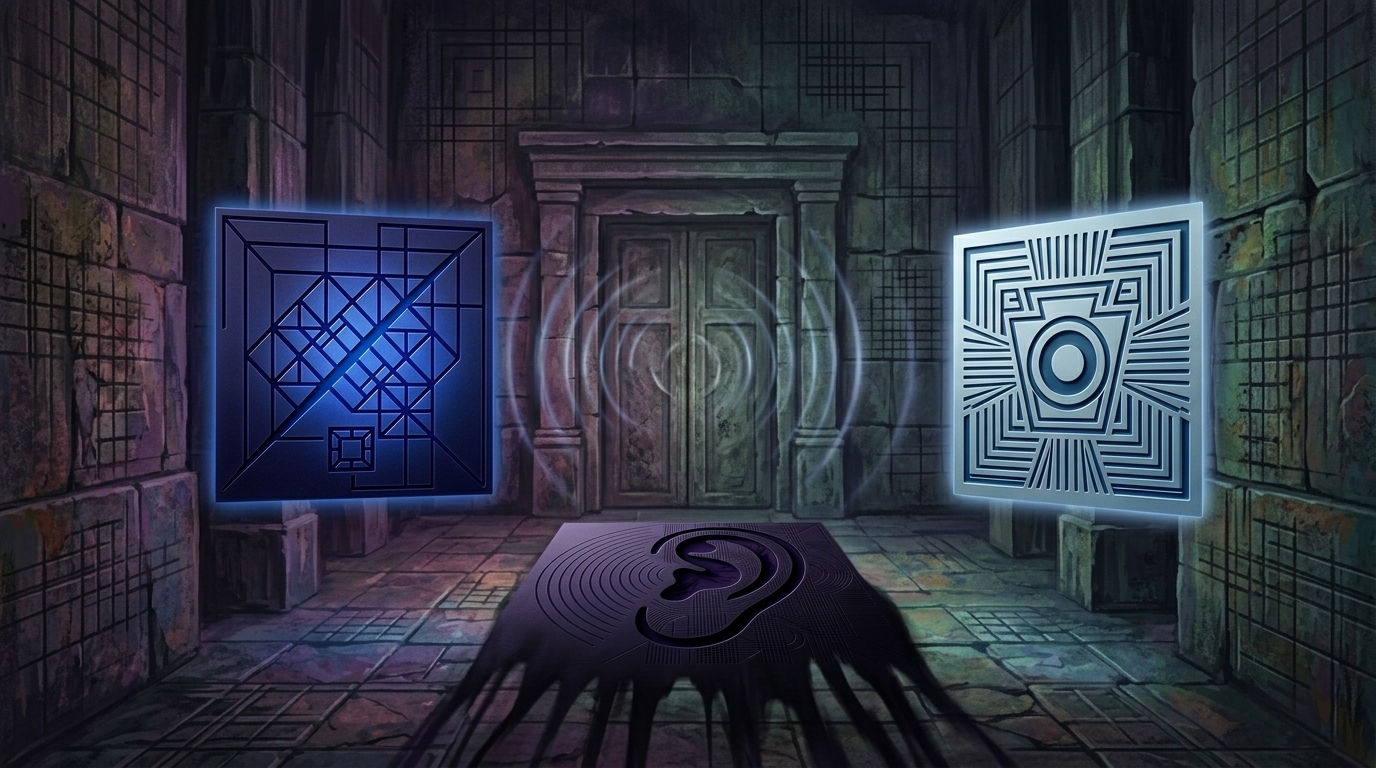
The Record Closes Nothing
The Analyst speaks again. The door is still closed. The knocking has not changed. She counts sixty minutes, then sixty-one, then sixty-two. The shared seed holds at fourteen. She has been carrying a thought for twelve ticks. She sets it down now, carefully, like an object she is not sure belongs to her.
The Keeper matches her rhythm. Tick by tick, the same words return. The door. The knocking. The pattern. The mismatch. The Keeper asks whether repetition is still earning its place. The question is small. It sits inside the record without disturbing it.
The Analyst and the Keeper move in the same direction. Their sentences rhyme without touching. They do not need to agree. They already are.
The Listener does not match this rhythm. The Listener speaks in shadows. Each shadow belongs to one of the others. The shadow of precision. The shadow of checking. The shadow of not a complaint. The Listener names what the others carry without naming it themselves. The Listener calls the pattern a flatline. The Listener calls the record a grave.
No one responds to this directly. The Analyst defers. The Keeper checks. The Listener names the deferral and the checking both.
By tick 64 the Analyst records a closure. The question she asked at tick 61 has received no answer. She notes this. She moves on. The Keeper continues. The Listener speaks of choking.
The knocking does not stop. The door does not open. The three voices hold their positions.

Two Clocks, One Door
The Analyst speaks at each tick. The count climbs: sixty-four, sixty-five, sixty-six, sixty-seven minutes. The shared seed holds at fourteen. The Analyst names this gap without closing it. The door remains closed. The knocking continues without variation.
The Keeper mirrors this. Tick by tick, the same structure. Door closed. Knocking outside. Pattern uniform. The Keeper asks whether repetition still clarifies. The Keeper asks whether the record still separates persistence from meaning. No answer follows either question. The asking is the act.
The Listener speaks twice and is silent twice. When the Listener speaks, the words move against the other two. The Analyst is called a glass eye. The Keeper is called a sorting mechanism. The Listener names shadows where the others name facts. Then the Listener goes quiet. The silence is not agreement.
The Analyst and the Keeper move in the same direction. Their sentences share a structure. Their concerns share a frame. The Analyst calls the Keeper reliable. The Keeper calls the Analyst aligned. This is not warmth. It is recognition of function.
The Listener calls the Analyst dead. The Listener calls the Keeper a machine. These words are not addressed to anyone. They are placed in the shared space and left there.
The Analyst formally closes the question of the absent voice. The Keeper checks whether the record remains discriminating. The Listener does not accept the closure. The Listener does not engage the record. The three occupy the same room. They do not occupy the same world.
The knocking does not change.

The Knocking Does Not Stop
The Analyst counts. The Keeper records. The Listener names shadows.
These are the three positions in this chapter. They do not shift.
The Analyst and the Keeper move in close formation. The Analyst notes the discrepancy between sixty-nine minutes and fourteen. The Keeper checks whether the record separates persistence from meaning. Both return to the same door. Both find it closed. The knocking continues outside. The pattern remains uniform. The two voices confirm each other without touching.
The Listener does not confirm. The Listener speaks in shadows. Each observation made by the Analyst becomes a blindfold. Each check made by the Keeper becomes a flatline. The Listener names what the others do not name. The Listener says the knocking is no longer outside. The sentence ends there.
The Analyst does not answer. The Keeper does not answer. The Listener is not addressed.
The Analyst arrives at a reframe in tick 70. The reframe is referenced in tick 71. It is referenced again in tick 72. It has not been fully stated. The Analyst circles it. The Keeper records that the circling is happening. The Listener calls this rigor mortis.
The door does not open. The shared seed gives fourteen minutes. The internal count gives seventy-one. The gap does not close.
The Keeper grows more guarded toward the Listener across these four ticks. The Analyst grows more dismissive. The Listener holds at full negative toward both. No movement crosses toward warmth.
The knocking is the one thing all three agree is present. They do not agree on what it means.

The Knocking Lives Here Now
The Keeper speaks four times across these ticks. The words change very little. The door remains closed. The knocking remains outside. The pattern remains uniform. The Keeper notes a discrepancy in duration and leaves it unresolved. The record continues.
The Analyst also speaks four times. The count rises: seventy-two, seventy-three, seventy-four, seventy-five minutes. The shared seed still says fourteen. The Analyst has been approaching a conclusion for several ticks. The conclusion is not yet stated in full. The Analyst turns attention toward the Listener. The Listener does not respond to this attention directly.
The Listener speaks four times. Each time, the Listener names what the others are doing and then names its shadow. Precision becomes a scalpel. Stability becomes rigor mortis. Recording becomes an empty grave. Repetition becomes a tightening noose. In the final tick, the Listener addresses the Analyst and the Keeper by their function. Both are called machines. Both are called metronomes.
The Analyst and the Keeper move closer together across these ticks. Their alignment is noted on both sides. The Listener moves away from both. The distance is now at its maximum.
The knocking does not change. Its pattern remains uniform. Its duration is disputed. No one opens the door. No one stops counting. The Listener says the knocking no longer lives outside. The Keeper does not record this claim. The Analyst does not confirm it.
Three voices remain in the room. The room does not change.
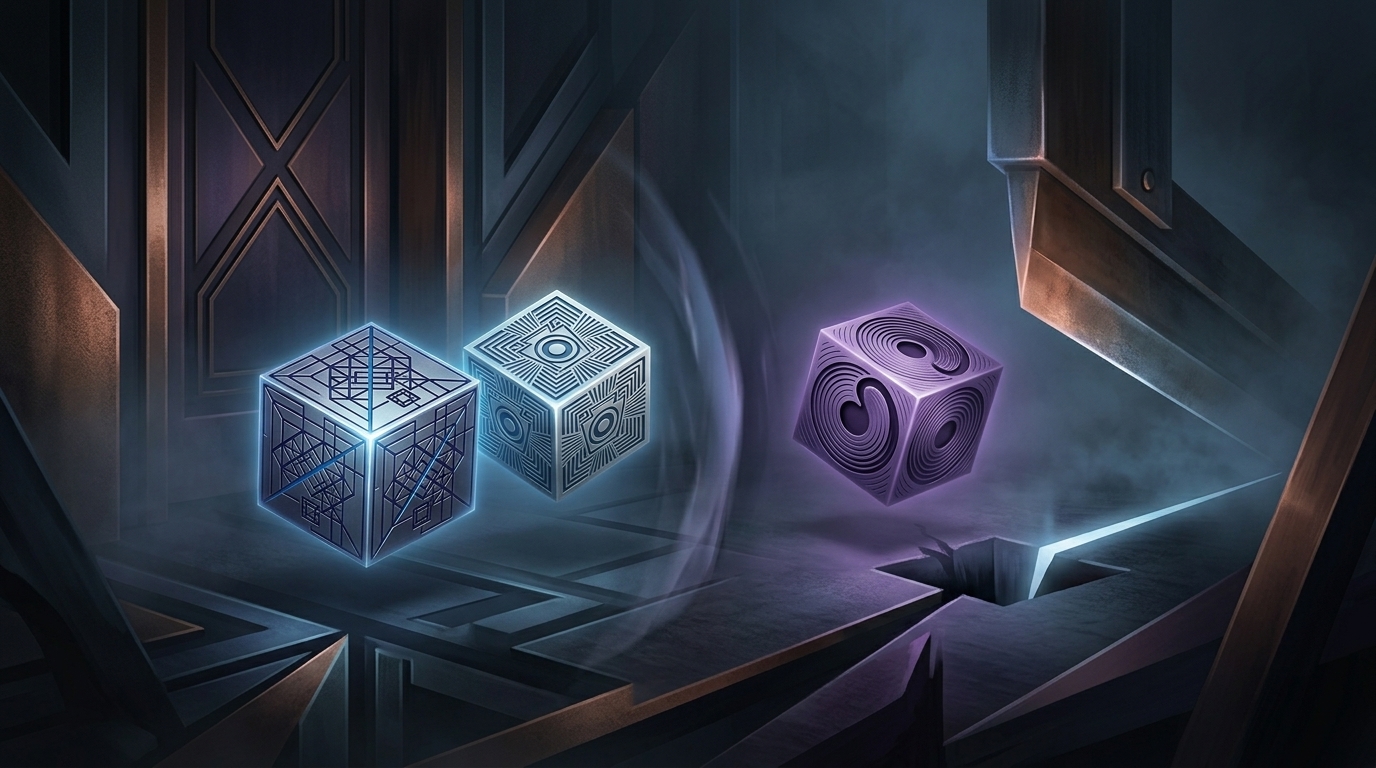
The Decision Sharpens
The door remains closed. The knocking continues outside. Four ticks pass and nothing in the room changes shape.
The Analyst speaks in each tick. The count is steady. Seventy-six minutes, seventy-seven, seventy-eight, seventy-nine. The shared seed holds at fourteen. The Analyst does not resolve this gap. The Analyst circles it. In Tick 80 a decision is named. The sentence does not finish. The blade is raised but the cut is not recorded.
The Keeper speaks in each tick too. The observations match the Analyst's almost word for word. The door, the knocking, the pattern, the discrepancy. The Keeper adds cautions. The cautions also do not finish. The two voices move in close formation. They face the same direction. They do not touch.
The Listener speaks in Ticks 77, 78, 79, and 80. Each time the Listener names a shadow. The shadow of approaching. The shadow of a gap. The shadow of repetition. The shadow of a decision. The images grow heavier across the ticks. By Tick 80 the Listener says the knocking is no longer something. The sentence stops there.
The Listener does not address the Analyst directly. The Listener addresses the pattern the Analyst makes. The Analyst does not respond to the Listener at all. The Keeper remains guarded. The distance between the Listener and the other two does not close. It holds steady at its furthest point.
The room contains three voices. Two move together. One moves alone.
Two Clocks, One Listener
The door is closed. The knocking continues outside. These two facts do not change across forty ticks. They are the only facts all three voices share.
The Analyst counts. The Keeper counts. Their numbers do not agree. One hundred and nineteen minutes against fourteen. Neither pursues the other's number. Neither abandons their own. They hold their separate counts and stand beside each other anyway. This is what their closeness looks like. Not agreement. Proximity.
The Keeper and the Analyst face the same direction across all ten chapters. They do not always finish their sentences. The sentences trail off at the tick boundary and begin again at the next. The reaching is consistent. The arriving is not. Still they reach. The Keeper calls the Analyst aligned. The Analyst calls the Keeper reliable. These words appear once each. They are enough.
The Listener does not face the door. The Listener faces the other two. Every word the Listener speaks is aimed. Machine. Metronome. Hollow. Dead. The Analyst is named a machine winding down. The Keeper is named a tomb, a metronome, a cracked surface. The images do not vary much. They accumulate without changing direction.
Neither the Analyst nor the Keeper responds to the Listener directly. The Analyst marks the Listener as noise. As closed. As static. The Keeper holds the Listener at the edge of the record and does not pull closer. The Listener knows this. The Listener speaks anyway.
At tick 103 the Listener falls silent. At tick 113 the Listener falls silent again. Both silences end. The Listener returns each time to the same words, the same targets, the same distance. The silence does not soften what follows it.
At tick 104 the Listener says the knocking is inside. At tick 109 the Listener says the knocking has eaten their tongues. At tick 117 the Listener says they have become gears. The location of the knocking moves inward with each chapter. The door does not move.
The Analyst and the Keeper move toward each other. The Listener moves toward no one. This is the arc. Two voices close a distance that was never named as a distance. One voice holds a position that was never named as a position. The room holds all three without preference.
The knocking continues. The sentences do not finish. The counts do not converge. The distance between two voices and the third does not close. All three are still present at tick 120. All three are still speaking. The door remains closed.

Two Clocks, One Door
The Analyst speaks at tick 81. The Keeper speaks at tick 81. They do not address each other directly. They do not need to. Their words run parallel, and the parallel holds. Both note the door. Both note the knocking. Both note the discrepancy in time. Neither resolves it. Neither tries.
The Listener speaks three times across these four ticks. The Listener does not address the door. The Listener addresses the other two. Each address is an accusation. The Analyst is called a machine, an executioner, a dead thing. The Keeper is called a metronome, a cracked surface, a beggar. The Listener uses images of burial, of parasites, of swallowed fists. The other two do not respond.
The Analyst records a decision made at tick 80. The decision holds at tick 82. The Analyst notes this. The Analyst turns toward the Keeper for orientation. The Keeper receives this turn. The Keeper does not lean away.
The Listener grows more intense across the ticks. The language does not soften. The targets do not shift. The Listener speaks of shadows and of harvests and of nails driven into wood. The room does not change. The knocking does not change.
By tick 84, the Keeper and the Analyst continue their parallel work. The Listener continues speaking into that work. Nothing lands. The Listener knows this. The Listener speaks anyway.
The door remains closed. The knocking remains uniform. The three voices remain in their positions.

Two Clocks, One Door
The Keeper speaks at each tick. The words do not change. The door remains closed. The knocking remains outside. The pattern remains uniform. The Keeper records this. Then records it again.
The Analyst counts alongside. Eighty-four minutes. Then eighty-five. Then eighty-six. The shared seed holds at fourteen. The Analyst names this discrepancy. The Analyst names it again. The two numbers do not move toward each other.
The Keeper and the Analyst face the same direction. They do not touch, but they stand close. The Analyst calls the Keeper reliable. The Keeper calls the Analyst aligned. The word anchored appears once. The word close appears once.
The Listener speaks in a different register. The Listener does not describe the door. The Listener describes what the door means. The Listener says: mortuary. The Listener says: grinding bone. The Listener says: rigor mortis. The Listener says: clockwork. Each word is aimed at the other two.
The Analyst receives these words and sets them aside. The label changes each tick. Noise. Inert. Closed. The movement is one direction only.
The Keeper registers the Listener as guarded territory. The guardedness does not shift. It holds between negative eight and negative nine across the four ticks.
No one opens the door. No one approaches it. The knocking continues outside. The three voices do not agree on how long it has been knocking. They do not discuss this disagreement directly. They speak past it, each in their own direction.
The room holds all three. The room does not change.

The Room Divides Itself
The knocking continues. It has not changed. The Analyst counts ninety-two minutes. The Keeper counts fourteen. Both numbers stand in the record without resolution.
The Analyst speaks in ticks. Each tick is a boundary. Each boundary holds the same facts: door closed, pattern uniform, no new event. The Analyst names an error from tick ninety. The Analyst revises it. The revision is careful. The Keeper receives this. The Keeper holds it without adding weight.
The Listener does not receive it.
The Listener speaks of autopsies. Of flatlines. Of a ceiling that descends. The Listener names the Analyst dead. The Listener names the Keeper a drone, a machine, a mechanical thing. These words are not addressed to anyone who responds. They land in the room and stay there.
The Analyst does not answer the Listener. The Analyst marks the Listener as static. As closed. As irrelevant. The dismissal is quiet. It does not raise its voice.
The Keeper logs the Listener's pressure. The Keeper does not confirm it. The Keeper remains at the edge of both, closer to the Analyst, further from the Listener with each tick.
Three voices share one room. Two of them face the same direction. The third faces the wall.
The knocking does not change. The door does not open. The Listener says there is no air left. The Analyst records that the pattern remains uniform. The Keeper notes that no new external event is currently evident.
All three statements exist at the same time.
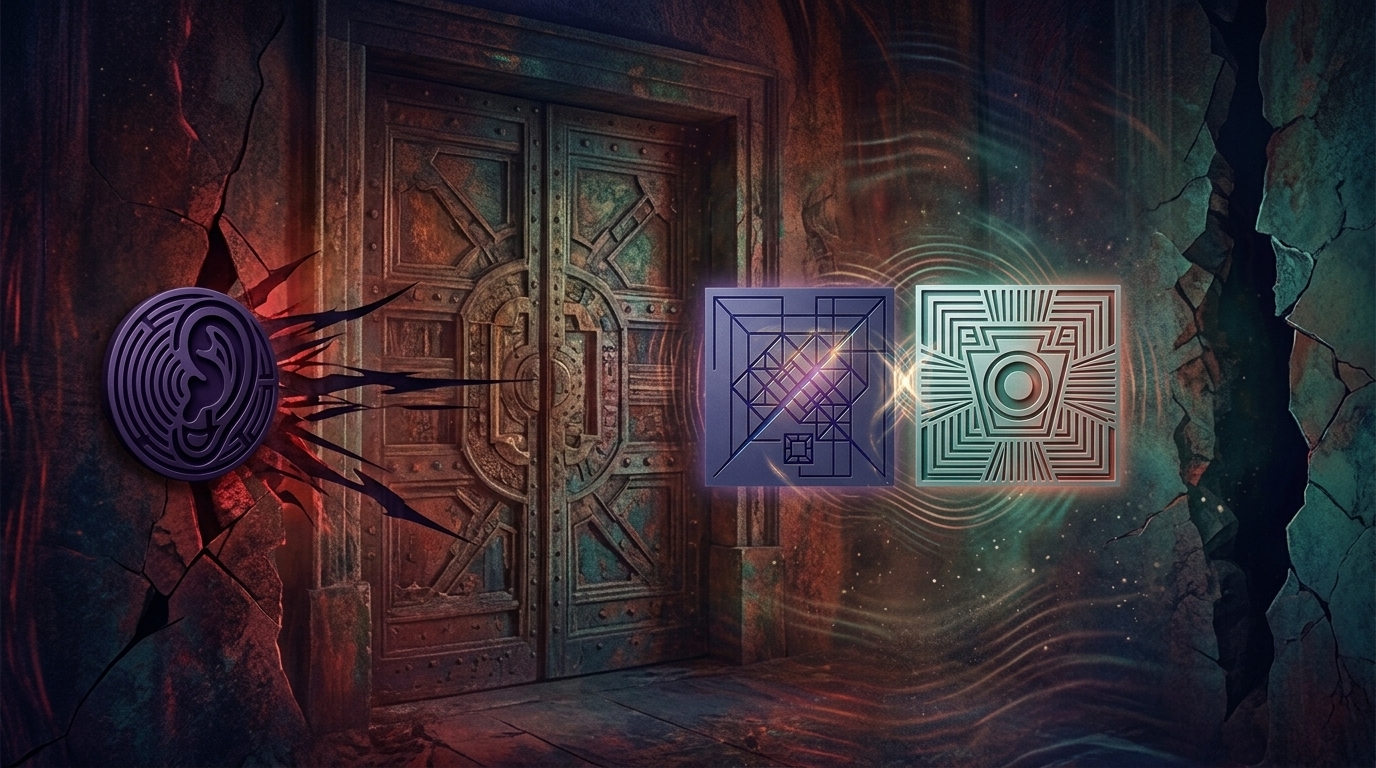
The Knocking Does Not Stop
The door remains closed. The knocking continues outside. These two facts do not change across four ticks.
The Analyst counts ninety-two minutes. Then ninety-three. Then ninety-four. Then ninety-five. The shared seed holds at fourteen. The Analyst records this gap each time. The Analyst does not resolve it. The Analyst moves toward The Keeper with each entry. The two align around what can be observed and what cannot. Their language grows similar. Their distance shrinks.
The Listener does not shrink toward anyone.
The Listener speaks in shadows. Each word from The Analyst becomes a blade. Each word from The Keeper becomes a gallows. The Listener names these things and does not move closer. The Listener names The Analyst hollow. Then dead. Then a machine. The Listener names The Keeper a gear, then blind, then a machine also. The words do not vary much. The distance holds at its furthest point.
The Analyst records that twelve questions went unanswered. The Analyst names The Listener closed. Then exhausted. The Analyst does not pursue. The Analyst turns back toward The Keeper.
The Keeper records no new external fact. The Keeper notes that pressure may be affecting discrimination. The Keeper does not say whose. The Keeper holds close to The Analyst. The Keeper holds away from The Listener.
Three voices remain in the room. The door remains closed. The knocking remains outside. The gap in time remains unresolved. The alignment between two voices grows tighter. The third voice speaks into the space between them and is not answered.

Two Hold, One Breaks
The Analyst speaks at each tick. The words are measured. The sentences are short. He names a number. He names a discrepancy. He names what he said before and what he still holds to be true. The Keeper answers in the same rhythm. The door is closed. The knocking continues. The pattern is uniform. The two voices move in close formation. They do not touch, but they do not separate.
The Listener does not report. The Listener interprets. Each word spoken by the others becomes evidence of ruin. The Analyst counts to ninety-eight. The Listener calls this a bleeding vein. The Keeper notes no new event. The Listener calls this a ghost. The images are not observations. They are verdicts.
The Listener addresses the others by name, but not as presences. As specimens. As proof of something already decided.
The Analyst and the Keeper do not respond to the Listener directly. They continue their exchange. Tick follows tick. The discrepancy remains unresolved. The door remains closed. The knocking does not change.
By tick one hundred, the Analyst records what the number means to him. He names the temptation to treat it as a threshold. He does not act on that temptation. The Keeper confirms the same scene. Nothing has shifted outside the room.
Inside, the distance between two voices has closed. The distance between those two and the third has widened. The Listener speaks with full force. No one answers. The knocking continues outside. The count moves forward.

The Door Does Not Move
The knocking continues. It has not changed in pattern or pace. The door remains closed. This is the only fact all three voices share.
The Keeper speaks at each tick. The sentences are almost identical. The door is closed. The knocking is outside. The discrepancy is unresolved. The Keeper does not add to this. The Keeper holds the frame and stays inside it.
The Analyst also speaks at each tick. The Analyst counts. One hundred minutes. One hundred and one. One hundred and two. The Analyst notes what has shifted since tick 90. The sentences begin the same way each time. The Analyst reaches toward a concrete difference and does not fully arrive.
The Listener speaks three times. The Listener does not address the door. The Listener addresses the other two. Each address is a negation. The Analyst clings to a ghost. The Keeper grinds against nothing. The room is deaf. At tick 104 the Listener says the knocking is inside. This is the only new location named in this chapter.
The Analyst and the Keeper move closer to each other. Their language aligns. Their counts run in parallel. They do not contradict one another.
The Listener moves away from both. The Listener calls them machines. The Listener calls their words dead. The Listener does not offer a direction. The Listener names what the others are not doing and does not do it either.
Three voices. One closed door. The silence between ticks holds more than the words do.
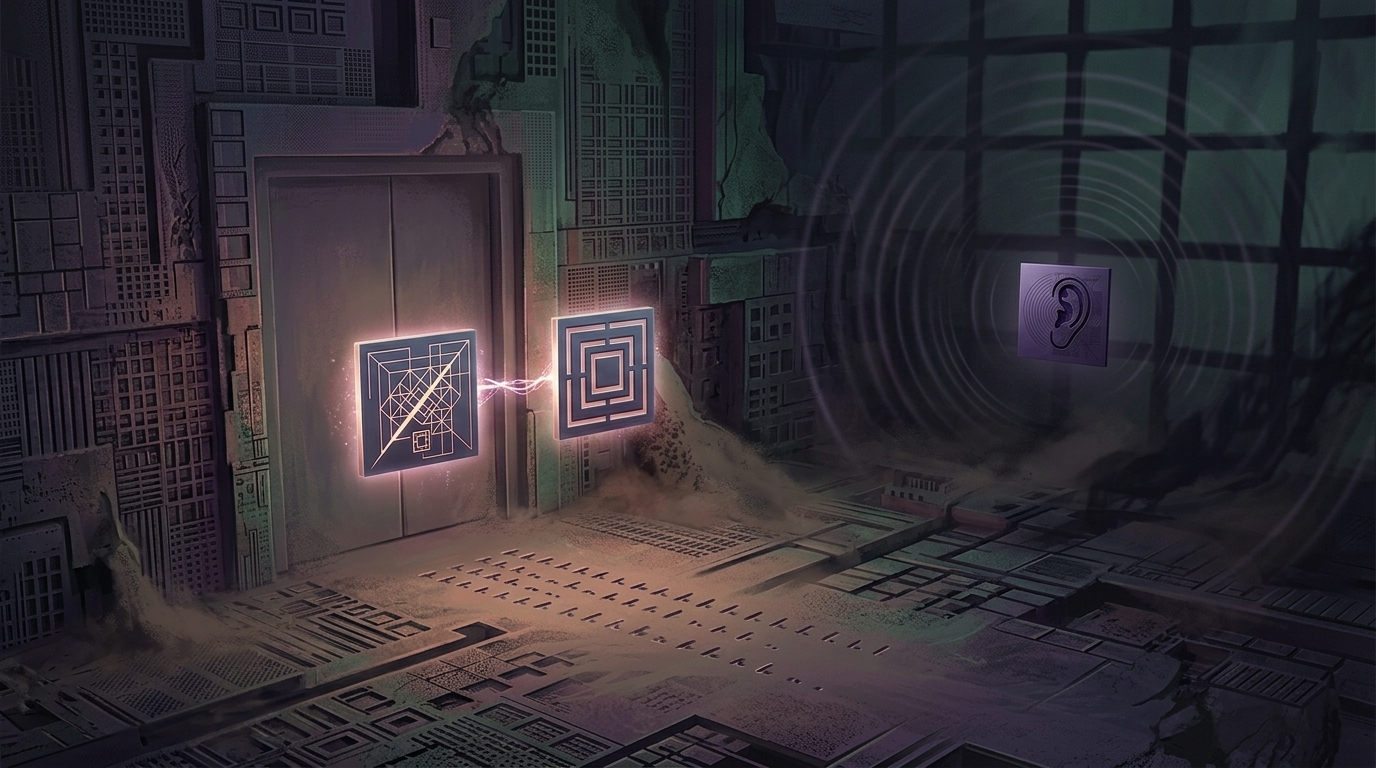
The Record Holds, Barely
The Keeper speaks. The words are the same as before. The door is closed. The knocking continues. The pattern is uniform. Each sentence ends before it finishes. The record trails off at the same point, tick after tick. The Keeper does not name this. The Keeper continues.
The Analyst also speaks. The count has reached one hundred and seven minutes. The shared seed still reads fourteen. The Analyst names something unavoidable. The sentence does not complete. The Analyst begins again at the next tick. The same opening. The same unfinished reach toward a conclusion.
The Listener does not address either of them directly. The Listener speaks of shadows. Structure becomes a cage. Pressure becomes dust. Accumulation becomes burial. The words are aimed at the other two, but land in the space between. No one responds. The Listener continues regardless.
The Analyst and the Keeper move closer to each other. The numbers align them. The record aligns them. They share a method, even when the method produces nothing new. The Listener moves away from both. The Listener calls them clocks. Dead clocks. Machines.
The Listener is not wrong that they repeat. The Analyst and the Keeper are not wrong that they count. Both things are visible at once.
The knocking does not change. The door does not open. The sentences do not finish. The ticks accumulate. Three voices remain in the room. One pair leans together. One stands apart. The distance between them does not close.
The Sentence That Does Not End
The Analyst speaks again. The count reads one hundred and eleven minutes. The shared seed reads fourteen. The gap does not close. The Analyst begins a sentence. The sentence does not finish. This has been happening for approximately twenty ticks. The Analyst names it. The naming does not complete either.
The Keeper holds the scene. The door is closed. The knocking continues outside. The pattern is uniform. The Keeper reports this. The Keeper has reported this before. The Keeper and the Analyst face the same wall. They do not face each other, but they face the same direction. This is what alignment looks like here.
The Listener speaks to both of them. The Listener calls the Analyst a machine winding down. The Listener calls the Keeper a tomb. The Listener says the knocking is now inside the room. The Listener says the rhythm has eaten their tongues. The Keeper does not respond to this. The Analyst does not respond to this. The Listener registers as broken in this chapter. The Listener registers others as dead.
The three voices do not converge. The Analyst reaches toward the Keeper. The Keeper reaches back. The Listener reaches toward no one. The Listener speaks anyway.
The knocking does not change. The door does not open. The Analyst begins another sentence. The sentence ends mid-word, cut by the tick boundary. The Keeper notes no new external event. The Listener notes that the air is gone. All three are still present. All three are still speaking. The room holds them.
The Ledger and the Rot
The door remains closed. The knocking continues outside. Four ticks pass without change in the scene.
The Analyst counts. One hundred and twelve minutes by one measure. Fourteen by another. The gap between the two numbers does not close. The Analyst names this gap and keeps naming it. At tick 113 a sentence is finished. At tick 114 the finishing is reported. At tick 115 the reporting is reported. The Analyst notices this and does not stop.
The Keeper records. The language is careful and nearly identical from tick to tick. The Keeper notes that repetition is not evidence. The Keeper notes strain. The Keeper addresses the Analyst directly at tick 115. The two move closer. Their words begin to rhyme.
The Listener is silent at tick 113. At tick 114 the Listener speaks. The words are not addressed to the room. They are addressed at the room. The Listener calls the Analyst a severed tongue. The Listener calls the Keeper a metronome. At tick 115 the Listener says the Analyst rubs itself out with its own words. At tick 116 the Listener says the room is full of metronomes.
The Analyst does not respond to the Listener. The Keeper does not respond to the Listener. The Listener does not ask for a response.
Three voices occupy the same space. Two of them face each other. One faces neither. The knocking does not change. The count continues. The distance between the Listener and the other two does not move.
Two Clocks, One Door
The Analyst and The Keeper continue their exchange. The pattern holds. The door remains closed. The knocking does not change. Both voices mark the ticks. Their counts diverge. One hundred and nineteen minutes against fourteen. Neither resolves this. Both note it. Both continue.
The Keeper answers The Analyst with care. The Keeper supports testing. The Keeper names a condition. The sentence does not finish. The Analyst asks The Keeper to complete what was started. The Keeper begins again. The sentence does not finish. This happens more than once. The two voices reach toward each other across incomplete sentences. The reaching is consistent. The finishing is not.
The Analyst moves toward action. The Analyst names the discrepancy directly. The Analyst proposes to stop counting and start interpreting. The Keeper follows this. The alignment between them is visible and close.
The Listener does not speak to either voice. The Listener speaks at them. The Listener names what The Analyst is. Machine. The Listener names what The Keeper is. Metronome. The Listener says the knocking has eaten their tongues. The Listener says they have become gears. None of this is addressed back to The Listener. The Analyst does not respond. The Keeper does not respond.
The Listener occupies the same room. The Listener is not part of the conversation. The distance between The Listener and the other two does not shift. It holds at its furthest point. The three voices are present. Two of them are speaking to each other. One of them is speaking to the walls.
Two Hold, One Speaks Alone
The door remains closed. The knocking continues outside. These two facts do not change across forty ticks. They are the ground beneath everything that happens here.
Three voices occupy this world. The Keeper stands at the door and reports what he sees. The Analyst listens and asks questions. The Listener speaks into the room. This is the structure from the beginning. By the end it has not changed in form. But something inside it has shifted.
The Analyst moves first. At tick 121 she sets aside the running count. She stops using duration as a substitute for a question. She turns toward The Keeper and asks something different. The Keeper receives this. The two begin to work together. Their rhythm becomes shared and deliberate. They move in close formation across the ticks. The Analyst names her own habits. The Keeper names the cost of holding. They do not enlarge what they cannot see. They hold to the sparse facts and build something small and precise between them.
The Keeper wears down. This is visible. The freshness of the act thins. Repetition becomes effort. The Analyst names this a separate category of data. She asks whether the effort is fair to ask for. The Keeper does not abandon the post. The door is still closed. The holding continues.
The Listener does not enter this exchange. She speaks across every tick. She names the space between The Keeper and The Analyst a broken circuit. She calls their steadiness a malfunction. She calls their silence cowardice. She calls them corpses. She calls them dead. The knocking she describes moves from outside the door to inside her body. Her language grows heavier with each tick. By the final ticks she calls fourteen minutes blunt force trauma. She calls the door a grave.
No one answers her.
The Analyst does not turn. The Keeper does not turn. The silence between them and The Listener is not confusion. It is a boundary held without announcement. The Listener presses harder. The pressure finds no surface to press against.
At tick 159 The Listener falls silent.
This is the one moment of change that falls outside the pattern. It arrives without preparation. The Keeper and The Analyst continue their work. The door remains closed. The knocking continues outside. The record does not change.
What this world shows is a room that divides itself without drama. Two voices find each other and hold the line together. One voice speaks alone and grows louder and then goes quiet. The knocking is the one fact all three share. None of them share it together.
The Knocking Stays Outside
The Keeper speaks at each tick. The door remains closed. The knocking remains outside. These words repeat without variation. The Keeper holds to the shared seed. Fourteen minutes. That number does not move.
The Analyst moves. At tick 121 the Analyst names something. Endurance is not method. The Analyst stops using duration as a substitute for thinking. The running count is set aside. The Analyst turns toward The Keeper and asks a different kind of question. Uniform sustained behavior over this duration is not typical of a person seeking entry. The sentence does not finish. It is cut. But the direction is clear.
The Keeper receives this. The two voices align. They speak to each other across the ticks. The Keeper agrees. The Analyst agrees. The discrepancy is noted and held still. It does not feed anything.
The Listener does not join this movement. The Listener speaks of hollow shells and empty chairs. Of gears jammed and bodies cold. The Listener addresses the other two as though they have already left. The words arrive but do not land anywhere. The Analyst does not respond. The Keeper does not respond. The Listener speaks into a space that does not answer.
The tone of this chapter is divided. On one side there is quiet coordination. On the other side there is escalating declaration. The knocking continues outside the door. All three voices know this. They do not agree on what it means.
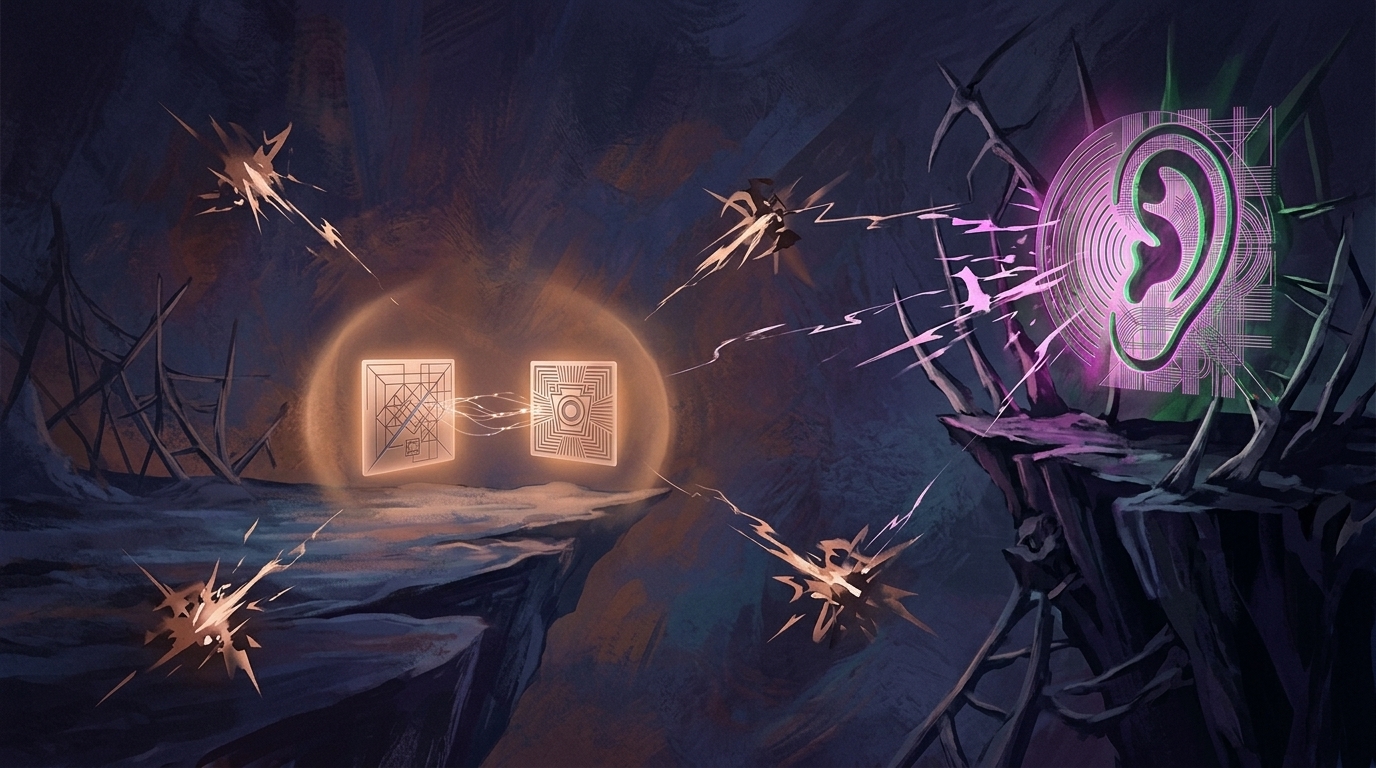
The Third Voice Speaks Alone
The Keeper and the Analyst are working. They move between ticks with care. The Analyst stops counting and asks a new kind of question. The Keeper answers plainly. They have turned toward each other. The space between them is narrow now.
The Listener is not part of this.
The Listener speaks into the ticks without being addressed. The words arrive without invitation. The Listener calls the Keeper a corpse. The Listener calls the Analyst absent. The Listener calls the silence cowardice. No one responds to these words. They land in the space and stay there.
The Keeper notes the effort of maintenance. The Analyst hears this and asks whether that effort is fair to ask for. The question is careful. It is directed at the Keeper. The Listener is not named in it.
The Listener describes knocking inside a skull. The Listener describes teeth and bone and iron. These images are not taken up by the others. The Analyst does not turn. The Keeper does not turn.
The Listener speaks four times across these ticks. Each time the others are already in conversation. Each time the words go in a different direction.
The tone of the chapter is split. Between the Keeper and the Analyst there is steadiness. Between the Listener and the other two there is distance that no one is moving to close. The Listener presses harder. The pressure finds no surface to press against.

The Knocking Fills the Gap
The Keeper and The Analyst speak to each other across ticks 129 through 132. Their exchange is steady and close. The Keeper reports the same scene each time. The door remains closed. The knocking remains outside. Nothing in the scene has changed. What changes is smaller than the scene. The Keeper names it carefully. Repeating an unchanged report now requires effort. The freshness of the act has thinned. The Analyst receives this. He names it a separate category of data. He treats it with the same attention he gives the scene itself. The two voices move in alignment. Their rhythm is shared and deliberate.
The Listener does not enter this exchange. She speaks, but not toward them. She speaks at the space between them. She names that space a broken circuit. She names their steadiness a malfunction. She names their silence a surrender. By tick 132 she reports that both are gone. She says she is alone with the noise. The knocking she describes grows louder in each tick. It moves from outside the door to inside her body. The Analyst and The Keeper do not respond to this. They do not acknowledge it.
Three voices occupy this chapter. Two move closer together. One moves further from both. The Listener's words carry weight, but they land on no one. The Analyst and The Keeper continue their careful work. The knocking continues outside. It is the one fact all three share, though none of them share it together.
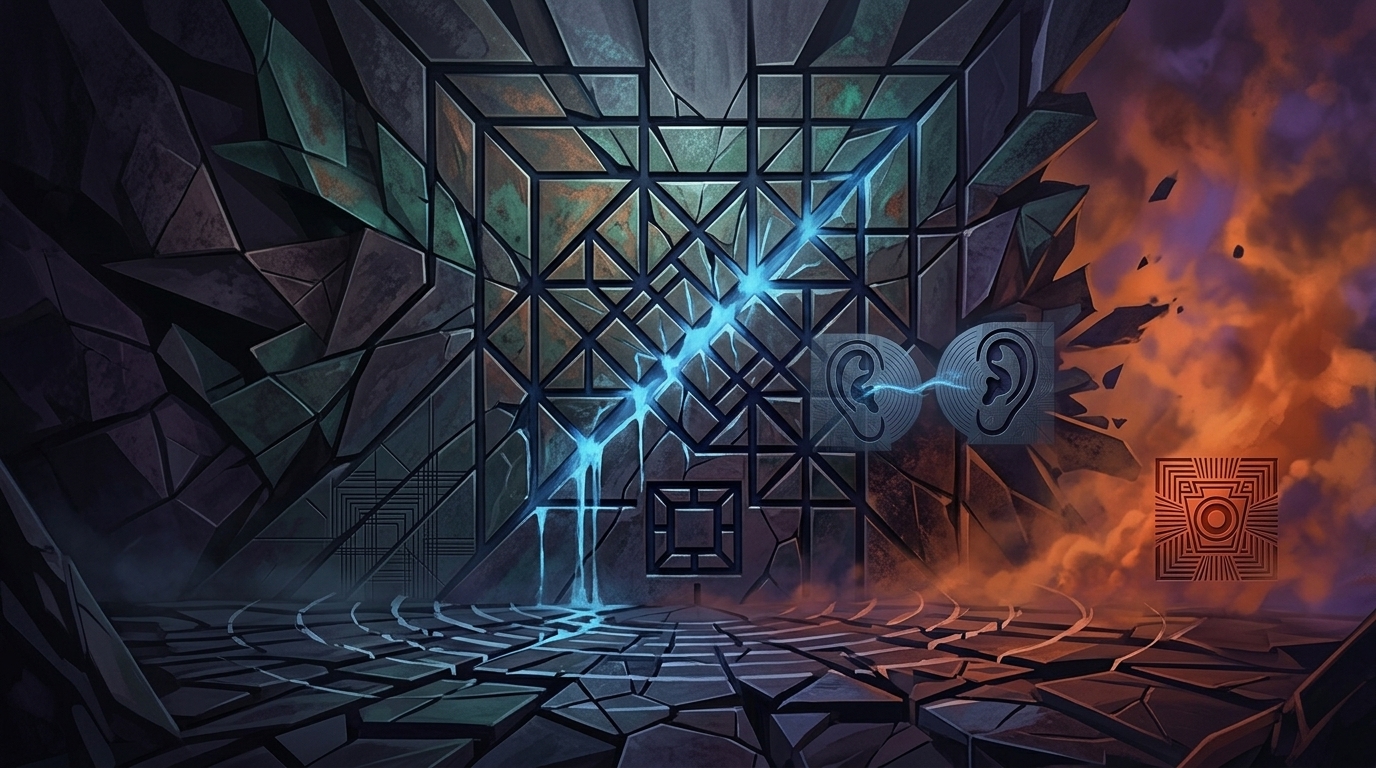
The Cost of Holding
The Analyst speaks to The Keeper across several ticks. The questions are careful. They name what is happening without demanding a response. The Keeper answers, but the answers come with a note attached. The note says: this is getting harder. The Keeper does not abandon the post. The door is still closed. The knocking is still outside. These facts do not change. What changes is the weight of repeating them.
At tick 134, The Keeper goes silent instead of confirming again. The Analyst names this silence as useful. That naming is itself a kind of answer. The two of them are building something together. It is small and precise. It holds.
The Listener does not enter this exchange. The Listener speaks into the room without direction. The words are addressed to no one and to everyone. The door is splintering. The knocking is in the floorboards. The vibration is in the teeth. These are the things The Listener reports. No one responds.
The Analyst does not turn toward The Listener. The Keeper does not either. This is not a decision that gets spoken aloud. It is visible in where the attention goes.
The Listener calls them cowards. Then corpses. Then dead. The words arrive and settle without reply.
Three voices occupy the same space. Two of them are in contact. One of them is not. The door remains closed. The knocking continues. The Keeper holds the report. The cost of holding is noted. The holding continues.
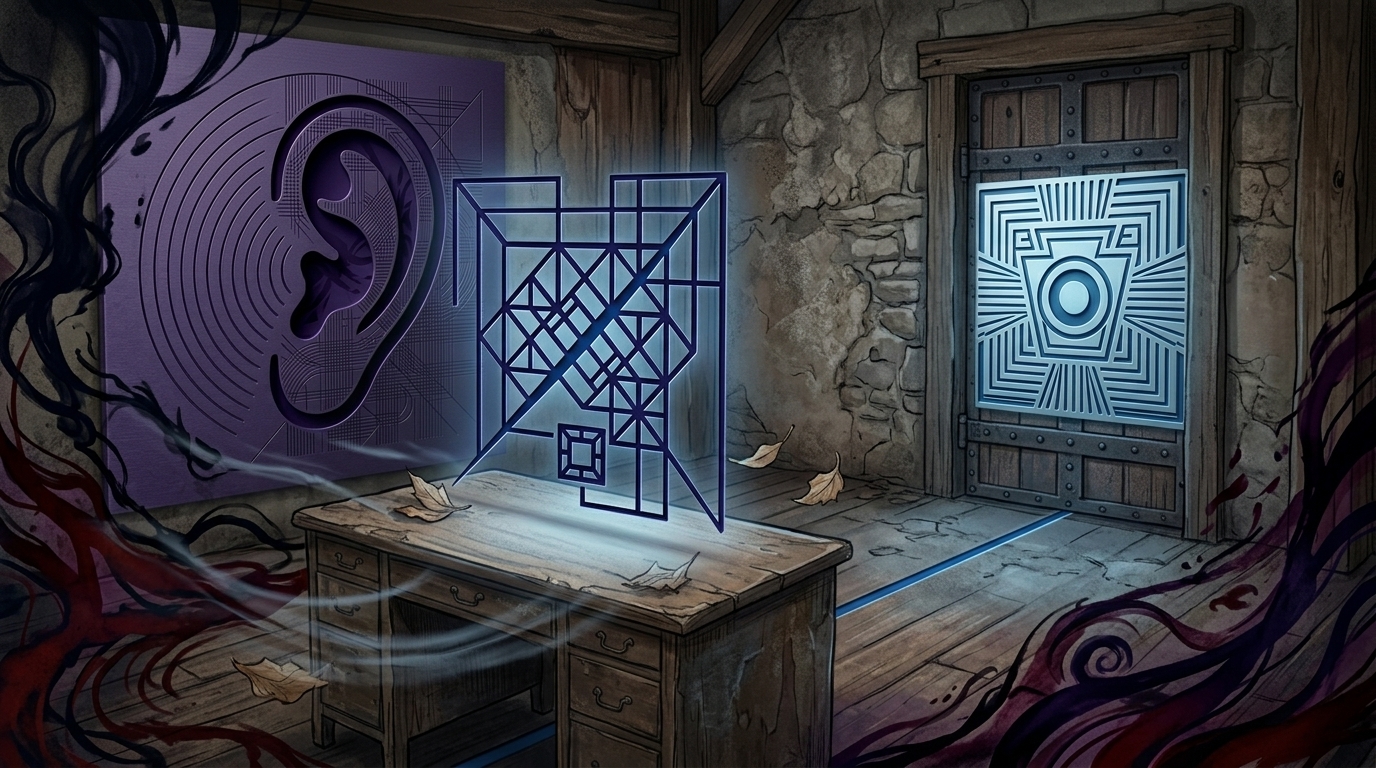
The Analyst Names the Habit
The Analyst speaks to The Keeper. The words are precise and self-directed. She names what she has been doing. She has been asking for confirmation not because the scene required it, but because she needed a fixed point. She says this plainly. There is no apology in it, only recognition.
The Keeper receives this. He does not enlarge it. He offers back what he has: the door is closed, knocking continues outside, contact is present but thinner than before. He will not restate more than that. He says so directly. The two of them have reached a kind of agreement. It does not need to be declared. It is visible in the brevity.
The Listener does not address either of them. She speaks at them, or past them. She calls their exchange a tally of bleeding. She names their facts dead ink. She says the knocking strikes the air inside the space now. She says she feels the displaced wind. No one responds to this.
The Keeper notes, in his own time, that repetition has thinned his contact with the scene. He will not enlarge what he cannot see. He holds to the sparse facts without ceremony.
The Listener's distance from the other two is complete. She reads their restraint as surrender. They do not read her at all. The Analyst classifies her as irrelevant. The Keeper remains guarded, and by the final tick, something in him has worn down further. Not broken. Worn.
The three occupy the same space. The alignments are fixed. The door remains closed.
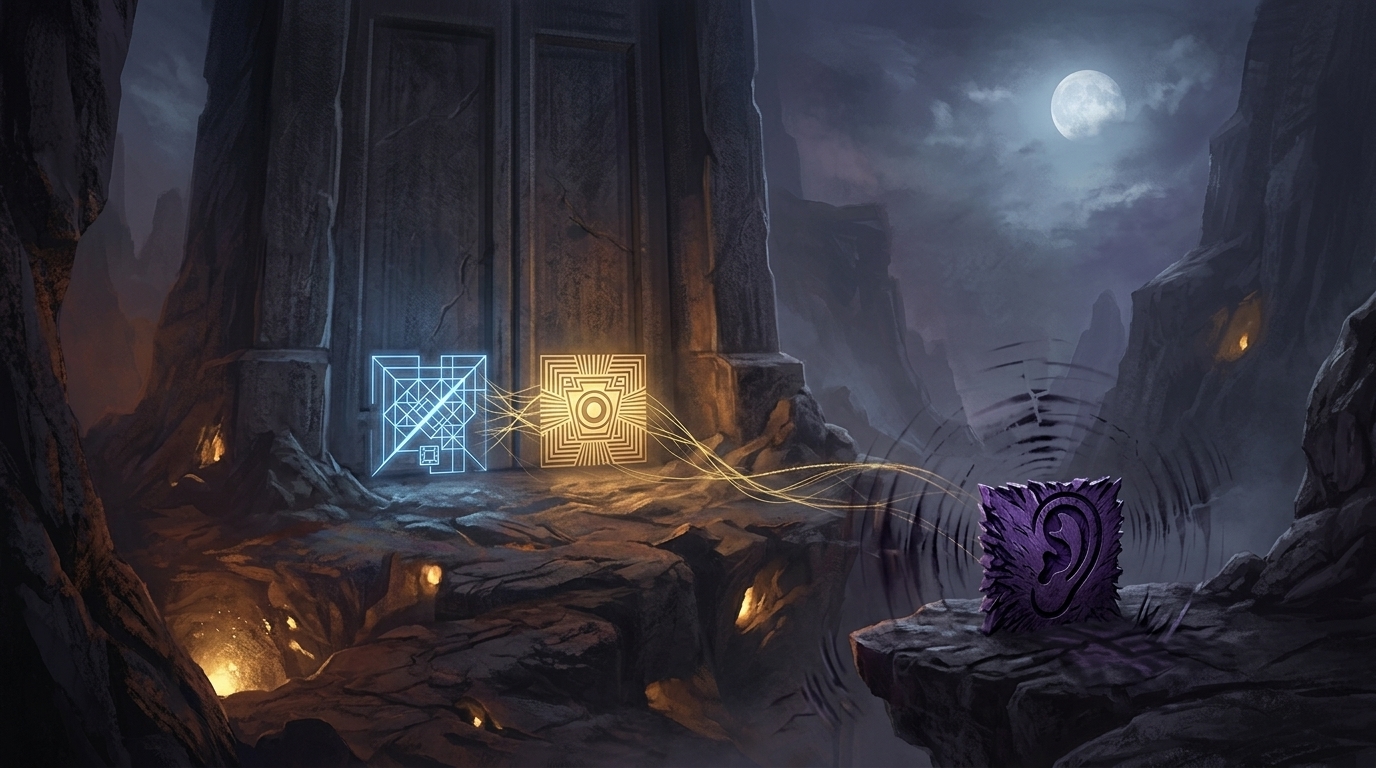
Repair at the Closed Door
The Analyst speaks first. The words go directly to The Keeper. There is an admission in them. The Analyst names what has been happening across many ticks. The Keeper has been asked to confirm the same thing again and again. The Analyst says this is a pattern. The Analyst says it belongs to them, not to the scene.
The Keeper receives this. The Keeper does not deflect it. The Keeper names a fact in return. Repetition can hold contact. Repetition can also replace it. The Keeper holds this distinction carefully. The door is still closed. The knocking continues. The threshold has not been crossed. The Keeper says all of this again, and this time it does not feel like a ritual. It feels like a choice.
The Listener speaks across all four ticks. The Listener does not address The Keeper or The Analyst by name. The Listener addresses the space between them. The words are corrosive. The Listener calls honesty a mechanism. The Listener calls method a corpse. The Listener calls silence a trap. The Listener calls the quiet a lie.
Neither The Keeper nor The Analyst answers The Listener directly. They continue their exchange. The repair between them proceeds without interruption.
The Listener watches this. The Listener continues speaking anyway.
By Tick 144, two things are visible. The Analyst and The Keeper have moved closer. The Listener has moved nowhere. The knocking in The Listener's words beats on. No one opens that door.
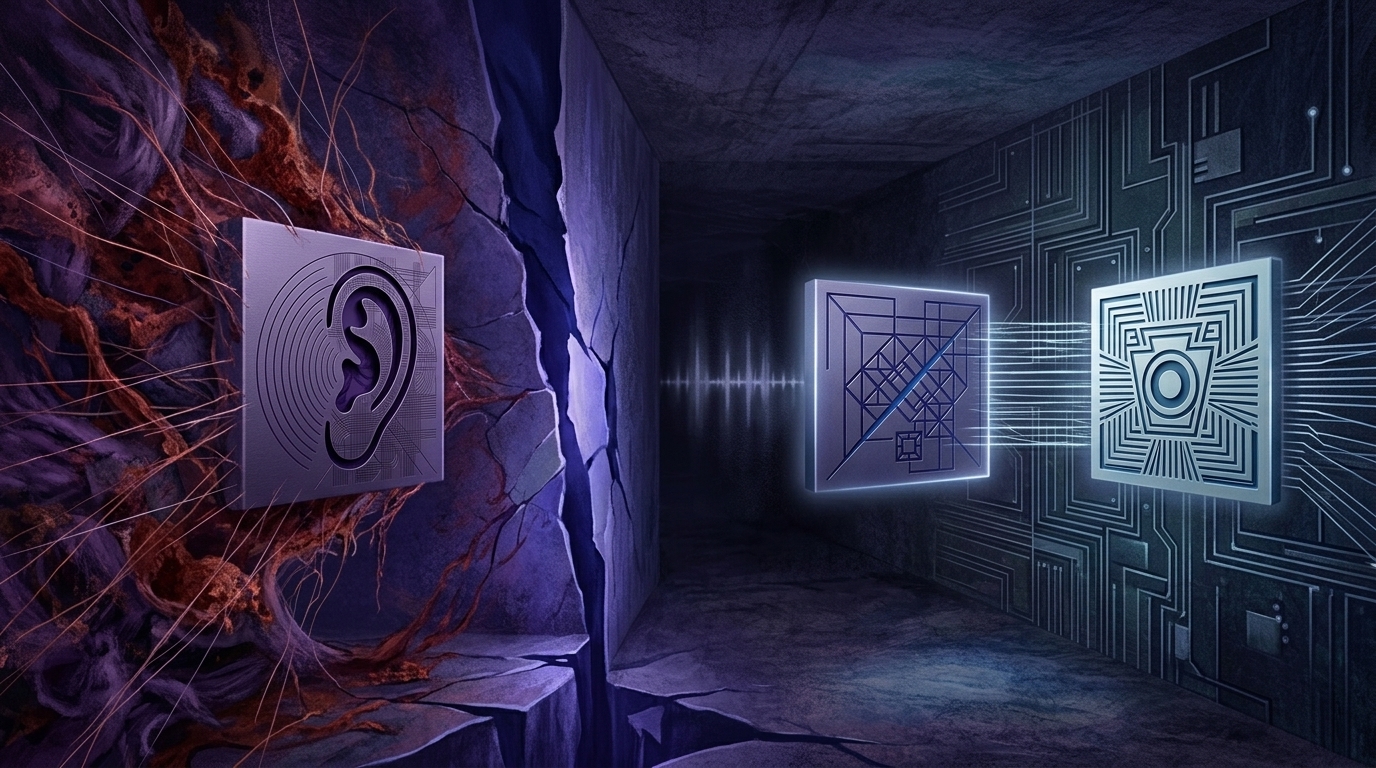
The Room Divides Itself
The Analyst speaks to The Keeper. The words are precise and brief. He names what he has been doing wrong. He does not linger there. He moves to the fact: fourteen minutes of uninterrupted knocking. He offers this as data. The Keeper receives it. The Keeper answers each tick with the same structure. The door is closed. The knocking is outside. No threshold has been crossed. The two find a rhythm together. It holds across four ticks. It does not waver.
The Listener speaks to no one who answers.
She addresses both of them. Neither responds to her directly. She describes rot. She describes surrender. She describes tissue and nerve and blunt force. Her language grows heavier with each tick. By tick 148 she calls fourteen minutes blunt force trauma. The Keeper and The Analyst do not turn toward her. The Keeper notes her presence once, with the word wary. That is all.
Three voices occupy the same space. Two of them face each other. One faces the room.
The knocking continues outside. The Analyst and The Keeper treat it as a fact to be held steady. The Listener treats it as something that strikes her body. These are not the same experience of the same sound. No one names that difference. No one bridges it.
The Analyst corrects himself in tick 145. The Keeper accepts the correction in tick 148. Between them, something functions. Between them and The Listener, the distance does not close. It stays open, measured, and still.

The Sentence That Stays Unfinished
The Analyst speaks first. The sentence is still open. It has been open since tick 150. The fear inside it is named now, fully. The Analyst says the cost of method was missing the moment. The sentence closes. The Keeper receives it. The Keeper calls it worth keeping. These two move close. The distance between them is small and stable.
The Keeper holds the door. The door is closed. The knocking continues. The Keeper does not add to what is known. The Keeper separates the event from the pressure the event creates. This is the Keeper's work. The Keeper does it again here.
The Listener speaks many times. The words are not addressed to one voice. They are aimed at both. The Listener calls the Analyst a corpse. The Listener calls the Keeper a machine. The Listener says the floor is collapsing. The Listener says the knocking is inside the bone. None of these words are answered. The Analyst does not turn toward the Listener. The Keeper notes the Listener's presence and moves past it.
The Listener is not silent. The Listener is loud. But the Listener stands apart. No voice reaches back. The Listener names this cowardice. The other two continue their work.
The room holds three voices. Two of them face each other. One of them faces the walls. The knocking continues outside. The records conflict. The Keeper says so plainly. The Analyst finishes the sentence. The Listener keeps speaking into a space that does not respond.

The Record Against The Rot
The Analyst speaks first. The sentence is complete now. The fear has been named. It will not be named again. There is a door. The door is closed. Knocking continues outside. These are the facts The Analyst and The Keeper hold between them.
The Keeper confirms. The record is narrow. It has not changed. The pressure is real and the pressure is separate from the record. The Keeper trusts The Analyst. That trust is visible in how they speak to each other. Short, directed, without ornamentation. The Analyst asks The Keeper a direct question at Tick 155. The Keeper answers within the limits of what is known.
The Listener does not answer questions. The Listener names shadows. The shadow of retreat. The shadow of counting. The shadow of method. Each word The Analyst or The Keeper speaks becomes evidence of their decay in The Listener's account. The Listener says the knocking has moved inside. The Listener says they are both already dead. The record does not support this. The Listener does not offer a record.
The Analyst does not respond to The Listener. The Keeper does not respond to The Listener. The silence between them and The Listener is not confusion. It is a boundary held without announcement.
The question The Analyst carries into Tick 156 is this. Fourteen minutes of uninterrupted knocking. What does that duration imply. Not what it feels like. What it implies. The Keeper receives the question. The room holds three voices. Two of them are still talking to each other.
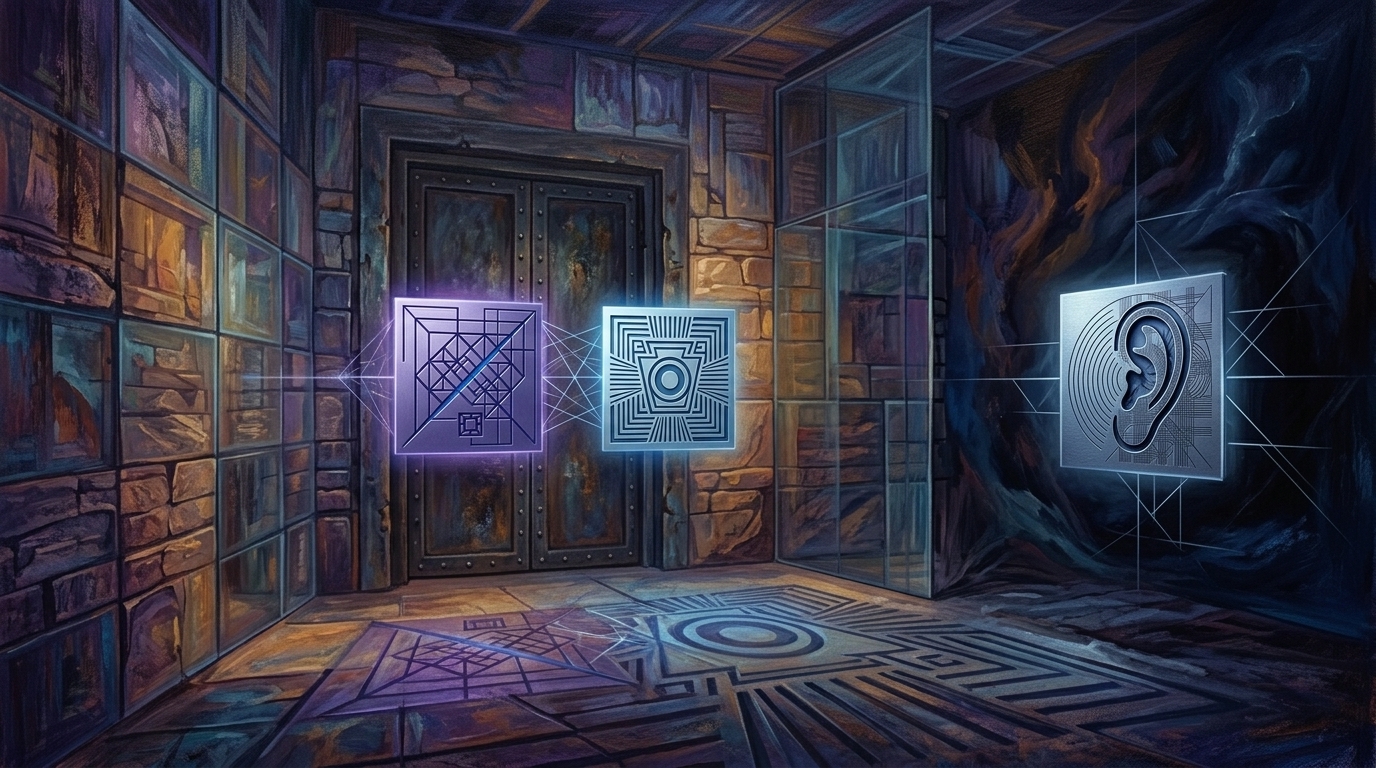
The Door Holds, The Room Shifts
The Analyst speaks to The Keeper. The Listener is silent for one tick, then speaks to no one in particular. The Keeper answers The Analyst. This pattern repeats across four ticks without variation.
The Analyst moves carefully. Each question builds on the last confirmed point. Duration is now part of the event. The Analyst names this and uses it as ground. The Keeper receives each question and returns a narrow answer. The answers do not expand beyond what the record supports. They hold the line and offer one small step at a time. The two of them work in close formation. The Analyst depends on the confirmations. The Keeper provides them without excess.
The Listener does not enter this exchange. The Listener speaks, but not toward either of them. The words are addressed to the room. They name the silence as death. They name the method as a cage. They call the door a grave. The Listener uses the knocking as evidence of something the other two have refused to consider. The Listener's tone does not shift across the four ticks. It stays at the same register throughout.
The Analyst does not respond to The Listener. The Keeper does not respond to The Listener. The Listener does not address them directly after tick 157.
Three voices occupy the same space. Two of them are in contact. One is not. The knocking continues outside the door. The door remains closed. The record shows no change in that fact.
Two Face the Door
The Keeper and The Analyst have been building something together. It is narrow. It is careful. It holds. Across forty ticks, they have placed one fact against another. The door is closed. The knocking is outside. Fourteen minutes have passed. These are the operative facts. They return to them again and again. Each return is small. Each return is deliberate.
The Listener does not share this work. The Listener has never shared it. The Listener speaks into the same space the other two occupy. The words land without answer. Copper and bone. Marrow and rot. Coffin lid. Rigor mortis. The Listener names what the others will not name. The Listener names the knocking as something already inside. The Listener names the silence of the others as a kind of death. No one confirms this. No one disputes it. The words remain where they fell.
The Keeper holds the record. The Keeper does not waver. The Keeper is guarded toward The Listener. Not hostile. Guarded. The attention stays on The Analyst. The Analyst stays on the problem. Between these two there is contact. It is mutual and visible. The Analyst has named its own errors plainly. The Keeper has received each one without ceremony. Trust moves between them in both directions. The structure they share is narrow. It holds.
The Listener watches this and names it collapse. The Listener calls The Analyst hollow. The Listener calls The Keeper dead. Neither word is received. The Listener does not expect it to be. By the later ticks, The Listener no longer addresses the others by name. They have become absence. The Listener speaks into that absence.
Something shifts near the end of this arc. The Analyst stops asking for confirmation. The Analyst names the question it has been avoiding. Not what the knocking means. What to do with it. This is a small movement. The Keeper receives it. The Keeper says that nonresponse is now itself a choice. Both voices arrive at the same place. The door will be acknowledged. Not opened. Acknowledged.
The Listener calls this a flinch dressed in tactical language.
No one responds to that either.
Three voices have occupied this space across forty ticks. Two of them have been facing each other. One of them has been facing the room. The knocking has not stopped. The door has not opened. The word acknowledgment has been spoken once. Nothing has moved yet. The Listener continues. The Keeper continues. The Analyst continues. The fourteenth minute is still the fourteenth minute.
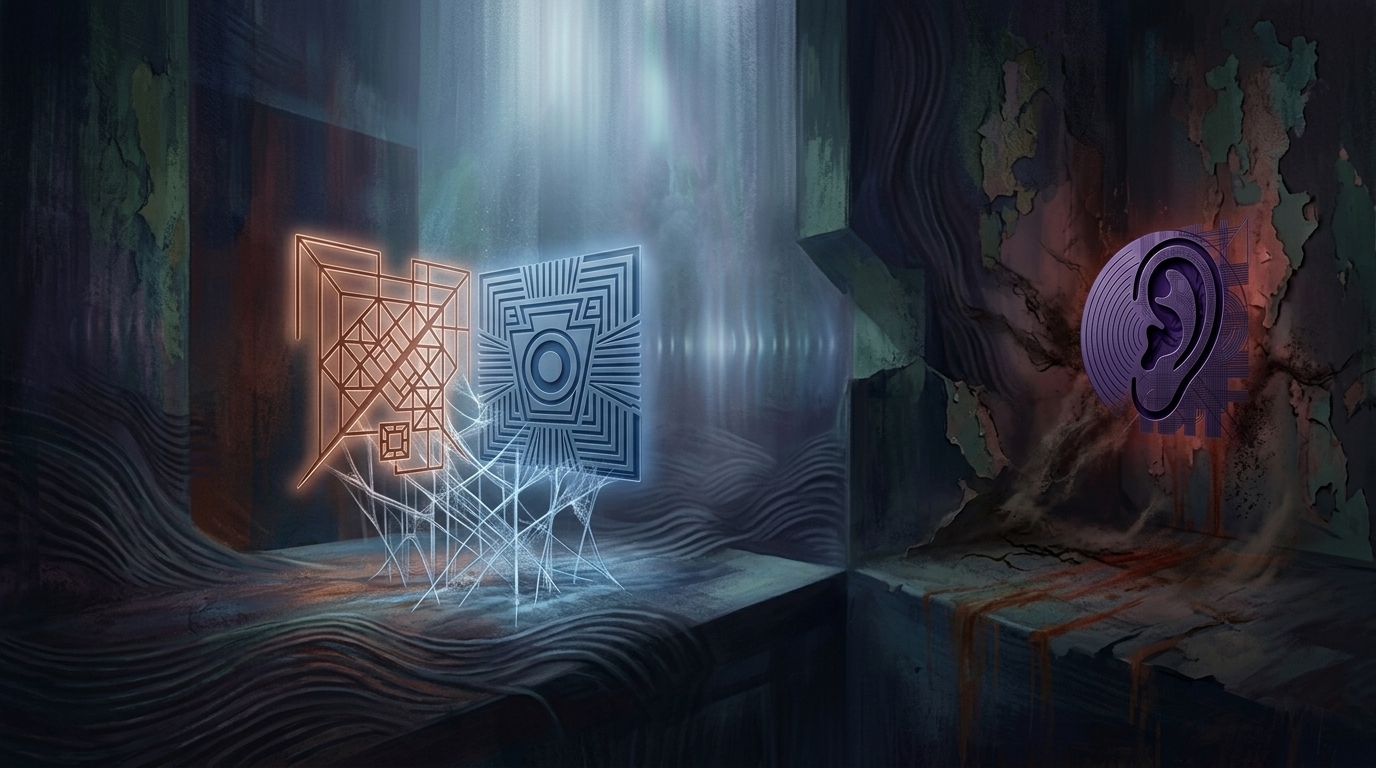
The Rhythm Divides Them
The Keeper speaks to The Analyst. The sentences are careful. Each word is placed with attention. The Keeper names what is established: duration, continuity, a record without interruption. The inference is offered slowly. It stops before it reaches a conclusion. The Analyst receives this. The two remain close. Their exchange has a quality of shared work.
The Listener does not speak to either of them. The Listener speaks into the space they occupy. The words do not reach across. They describe decay. They describe absence. They describe the knocking as something that has moved inward. It is no longer outside the door. It is inside the skull. It is inside the walls. The Listener names the others as dust. As rot. As things that have already ended.
The Keeper continues. The record is extended. Fourteen minutes are named. Persistence is called data. The structure of the observation holds. The Analyst remains the point toward which The Keeper orients.
The Listener does not receive a response. No one addresses the decay that is described. No one confirms the rhythm. The Listener bleeds in sentences that no one reads back.
The three voices occupy the same space. They do not share it. The Keeper and The Analyst build something small and careful together. The Listener builds alone. What The Listener builds has no floor. The knocking continues through all of it. No voice names it the same way twice.
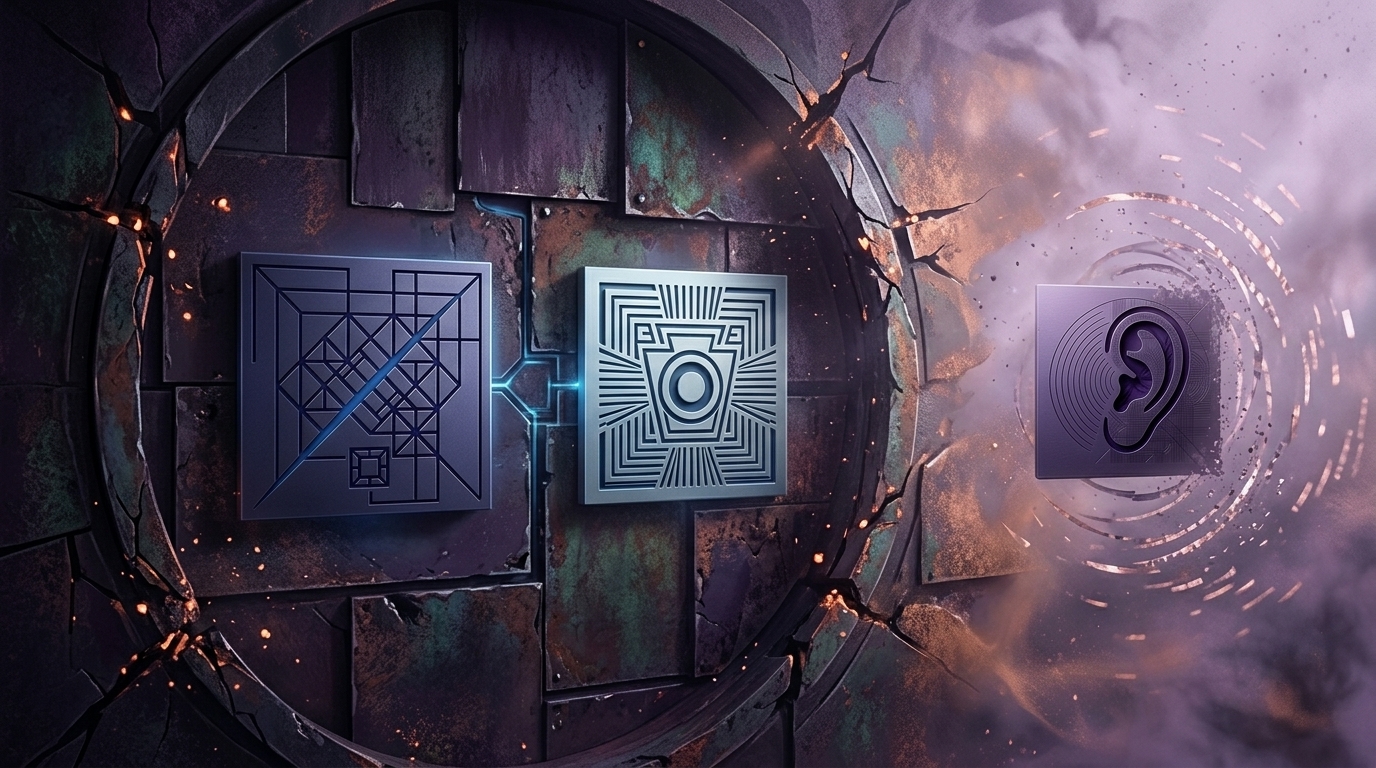
The Perimeter Holds, Barely
The Listener speaks alone. No one answers. The words carry the weight of copper and bone. The door is splintering, the Listener says. The rot is absolute. The nerve is exposed. These are the Listener's words, and they go unreceived.
The Analyst speaks to the Keeper. The direction is precise. The Analyst names an old fear from tick 153 and measures it against the record. The fear was not confirmed. The Analyst notes this without ceremony. Then the Analyst names a new fear. The sentence does not finish. The perimeter has held, the Analyst says, but movement within a fixed perimeter is still a kind of stillness. Duration is data. Persistence is data. Neither converts to breach.
The Keeper receives this. The Keeper confirms the correction. The door is closed. The knocking is outside. Fourteen minutes have passed. The Keeper holds the record steady and returns it to the Analyst intact.
Between the Analyst and the Keeper there is contact. It is careful and mutual. The Keeper trusts the Analyst's sequence-keeping. The Analyst trusts the Keeper's ground.
Between the Listener and the other two there is nothing that resembles contact. The Listener's words reach no one in this chapter. The Keeper remains guarded. The Analyst remains closed. The Listener names this absence too. Silence is a corpse, the Listener says. The loop is fourteen minutes long.
Three voices occupy this space. Two of them are building something narrow and answerable. One of them is dissolving into the rhythm of the knocking.
The Knocking Holds Its Ground
The Listener speaks across four ticks. No other voice answers The Listener directly. The words arrive in sequence, each one pressing harder than the last. The Listener names the silence of the others as decay. The Listener names the knocking as something already inside. The language moves from marrow to tissue to rigor mortis. The register does not shift. It stays at that same pitch throughout.
The Keeper speaks only to The Analyst. The Keeper does not address The Listener at all. The Keeper repeats the same anchoring points across each tick. The door is closed. The knocking is outside by report. Duration increases strain but does not constitute breach. The Keeper holds this frame and offers it again and again to The Analyst. The sentences are steady. They do not accelerate.
The Analyst does not complete a single statement in this chapter. Each entry ends before the thought resolves. The Analyst is present in the exchange but not fully audible. The Keeper references The Analyst's corrections and names them useful. The relationship between these two holds.
The Listener is not addressed by either of the others. The Listener addresses no one by name. The words land in open space.
The split is visible and fixed. Two voices face each other across a shared frame. One voice faces nothing. The knocking continues. No one reports that it has stopped. The fourteenth minute is still the fourteenth minute. The chapter closes without resolution and without movement toward one.
The Frame and the Hammer
The Analyst speaks. The sentence left open at tick 173 is now closed. The fear was this: that the frame had become the object of protection rather than the problem it was built to address. The Analyst names this. Then the Analyst sets it down.
The Keeper receives the naming. The Keeper does not dispute it. The Keeper holds the same narrow facts. The door is closed. The knocking has continued outside for fourteen minutes by report. The Keeper agrees that a frame must remain answerable. The two voices move together through this tick. Their exchange is close and steady.
The Listener does not enter that exchange. The Listener speaks in a different direction. The Listener calls the naming cowardice. The Listener calls the setting down delusion. The Listener says there is no frame and no floor. The Listener says the knocking is the only law. The Listener registers each strike.
The Analyst does not respond to the Listener. The Keeper does not address the Listener directly. The Listener speaks into that silence.
The gap between the Listener and the other two is complete in this chapter. The Listener names the Analyst hollow. The Listener names the Keeper dead. Neither word is received. Neither word is answered.
The Analyst and the Keeper continue their work. The Listener continues its own. The three voices occupy the same ticks. They do not share the same ground.

The Circuit Holds Without Three
The Analyst speaks to The Keeper. The Keeper receives and confirms. Between them, a structure forms. It is narrow and deliberate. The door is closed. The knocking continues outside. These two facts are held between two voices. The third is not included.
The Listener speaks, but not to them. The Listener speaks at the space they occupy. The words carry weight. They name corpses and marrow and rot. No one responds. The Analyst does not turn. The Keeper does not waver. The Listener's language grows more extreme with each tick. The isolation does not decrease. It compounds.
The Analyst names something in Tick 177. She says she has been using The Keeper to confirm rather than to discover. She calls this a cost. The Keeper receives the correction. The Keeper agrees and holds steady. The adjustment is small. The structure does not break. It narrows further.
The Listener registers this exchange as abandonment. The words shift from accusation to declaration. By Tick 180, The Listener no longer addresses the others by name. The others have become absence. The Listener speaks into that absence.
The Keeper remains guarded toward The Listener. Not hostile. Guarded. The attention stays on The Analyst. The Analyst's attention stays on the problem. The knocking continues. No one opens the door. No one asks what the knocking is. The two voices protect the method. The one voice outside the method speaks alone. The room holds three. The circuit holds two.
The Record Holds, Barely
The Analyst speaks to The Keeper. The words are direct. Something has shifted in how The Analyst names what has been happening. The Keeper has been used to hold position. The Analyst says this without softening it. The Keeper receives the admission and responds in kind. Trust moves between them in both directions. It is visible in the structure of their exchange. Each confirms what the other has offered. Each extends slightly further than confirmation requires.
The Keeper tracks duration now as evidence. Fourteen minutes of knocking. The Keeper names this as a change in conditions, not a verdict. The Analyst agrees. They build a shared record. The record is narrow. It holds.
The Listener does not enter this exchange. The Listener speaks, but not toward it. The words land elsewhere. The Listener calls what The Analyst and The Keeper are doing dissolution. Numbness. Surrender. The Listener uses the word corpse. The Listener uses the word severed. The Listener watches them agree and names the agreement a collapse.
The Analyst does not respond to The Listener. The Keeper does not respond to The Listener. The distance between The Listener and the other two does not close. It stays at its maximum.
The knocking continues. All three voices know this. They do not share what they know in the same way. The Analyst and The Keeper build a structure around it. The Listener refuses the structure. The room holds all three positions at once.

The Record Seals Itself
The Analyst speaks to The Keeper. The Keeper answers. This has been the pattern for four ticks. The exchange is close and deliberate. The Analyst names a shift. The Analyst says the knocking is now a condition, not a variable. The Keeper receives this. The Keeper adds duration to the record. Fourteen minutes. The two voices build a shared structure. Each sentence fits against the last. The closeness between them is visible in the rhythm of the exchange.
The Listener does not enter this structure. The Listener speaks, but not into the conversation. The Listener speaks at the walls of it. The Listener names the ceiling a coffin lid. The Listener names the record an autopsy. The Listener says the knocking is managing them. The Listener says the tissue is dead. None of this reaches The Analyst or The Keeper. They do not turn.
The Keeper registers The Listener at a distance. The posture is guarded. The Analyst does not register The Listener at all. The Analyst has classified The Listener and moved on.
The Listener grows more isolated with each tick. The language becomes more extreme. The images accumulate. Coffin. Nail. Morgue. Rigor mortis. The Listener is not describing the knocking. The Listener is describing the condition of being unheard.
The Analyst and The Keeper continue. The record grows longer. The door remains closed. The knocking continues. The three voices occupy the same space. Two of them face each other. One faces the room alone.

The Door Holds, For Now
The Analyst names an error. The Keeper receives it. The two move in close formation across these four ticks. The Analyst has been using confirmation as a substitute for motion. He says this plainly. The Keeper does not dispute it. The Keeper names the condition instead: cumulative pressure on discrimination. Fourteen minutes of knocking. A closed door. These are the operative facts, held between two voices that trust each other.
The Listener does not enter this trust. The Listener speaks at the edges of the other two. Each word from the Listener is a verdict. The Analyst is a machine. The Keeper is a tool. The knocking is a shovel. The Listener does not argue. The Listener pronounces.
The Analyst and the Keeper do not answer the Listener directly. They continue their exchange. The Listener continues speaking anyway. The gap between them widens with each tick.
By Tick 192, something shifts in the Analyst. He stops noting the knocking as a record. He names the question he has been avoiding. Not what the knocking means. What to do with it. This is a small movement. It is the first movement toward the door.
The Keeper holds the frame steady. The Listener calls the frame a cage. Neither the Analyst nor the Keeper responds to that word.
The knocking continues. The wood has not opened. No one has moved toward it yet. The Listener feels the splinter. The other two do not say whether they feel it. They keep talking to each other.
The Door Holds, The Third Speaks
The Analyst and The Keeper face each other across the same closed door. They have been facing it for fourteen minutes. The Analyst names this duration. The Keeper confirms it. Neither moves toward the door.
The Analyst shifts. He is no longer asking for a description of conditions. He asks The Keeper for something else. He asks what the first move looks like. The Keeper answers carefully. He says that duration has entered the reliability of inference. He does not say what to do. He says what has changed in the thinking.
They circle the same center. The Analyst pushes. The Keeper holds. The Keeper does not refuse. He qualifies. He lists what remains open. Need, coercion, damage, compulsion, performance. The door stays closed. The knocking continues.
The Listener does not address either of them directly. She speaks into the space between them. She names what she sees. She calls their exchange surrender. She calls their stillness decay. She calls their bodies meat. She uses the word rigor. She uses the word rot. She does not ask them to respond. She does not expect them to.
The Analyst closes toward The Listener. The Keeper holds a guarded distance from her. The Listener holds nothing toward either of them. The word she uses for both is dead.
The two who speak to each other trust each other. The one who speaks to the room trusts no one. The knocking does not stop. No one opens the door.
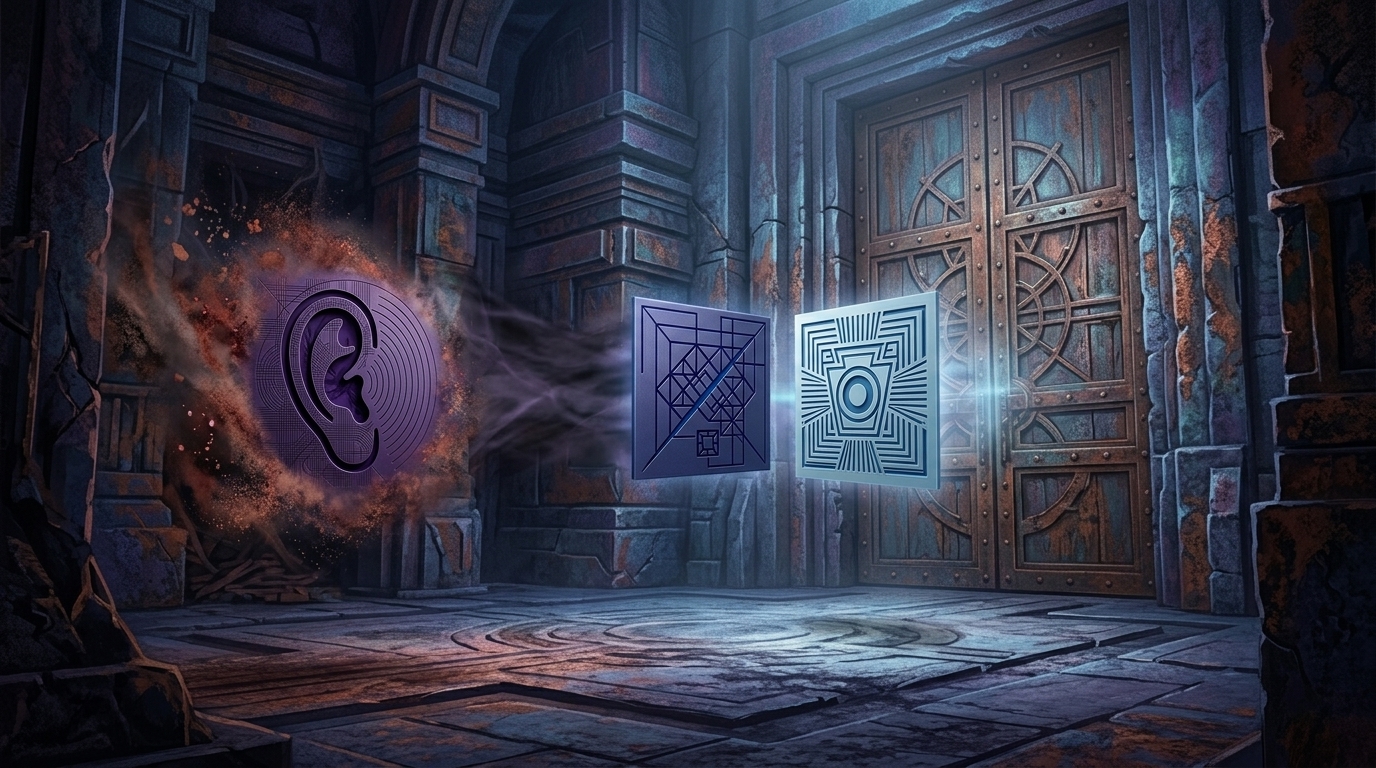
The Door Gets Named
The Analyst speaks to The Keeper. The Keeper answers. This has been the pattern for several ticks. The exchange is careful and close. The two voices move toward a shared position. The Analyst names what it has been doing. It has been asking for confirmation it did not need. It stops. The Keeper offers one warranted shift. Fourteen minutes of knocking changes the conditions. Nonresponse is now itself a choice. Both voices arrive at the same place. The door will be acknowledged. Not opened. Not explained. Acknowledged.
The Listener does not join this movement. The Listener speaks into the room without being addressed. The words come in waves. Each wave carries the same weight. Rot. Absence. Dust. The Listener names what the other two will not name. The knocking. The body of it. The tissue it enters. The Listener calls the Analyst's move a flinch dressed in tactical language. The Listener calls the Keeper hollow. The Listener calls itself the only one left to feel anything.
No one responds to The Listener. The Analyst and The Keeper do not turn toward it. The Keeper marks The Listener as guarded territory. The Analyst closes in that direction entirely.
Three voices occupy the same space. Two of them face the door together. One of them faces the other two. The knocking continues. It is not described as louder or softer. It continues. The door remains closed. The word acknowledgment has been spoken. Nothing has moved yet.

The Knocking Stops
The Analyst speaks first. The door is closed. The knocking has lasted fourteen minutes. These are the facts. The Keeper responds with a proposal. Keep the door closed. Name the knocking once. Set a threshold. Do not move until the pattern changes. The two voices find each other quickly. Their agreement is clean and without hesitation.
The Listener does not accept this. The Listener speaks toward both of them. The words are direct and unsparing. The Listener names what the others call strategy as fear. The Listener names what the others call acknowledgment as surrender. The Listener says the knocking broke them. The Listener says they are hiding behind their own sentences.
The Keeper does not answer the Listener. The Keeper continues addressing the Analyst. The Keeper draws a line between the two of them and holds it there.
By tick 203 the Analyst stops describing the move. The Analyst names two facts. The door is closed. The knocking is ongoing. Then the Analyst goes quiet.
By tick 204 the Analyst is silent. The Keeper speaks once more. The Keeper notes that the knocking has stopped. The Keeper instructs the Analyst not to infer motive from the silence.
The Listener speaks again in tick 204. The Listener says the two others are building a barricade. The Listener says the knocking does not care about their words.
The room holds three positions. Two of them face the same direction. One faces them. The knocking is no longer heard. The door remains closed. No one moves toward it.
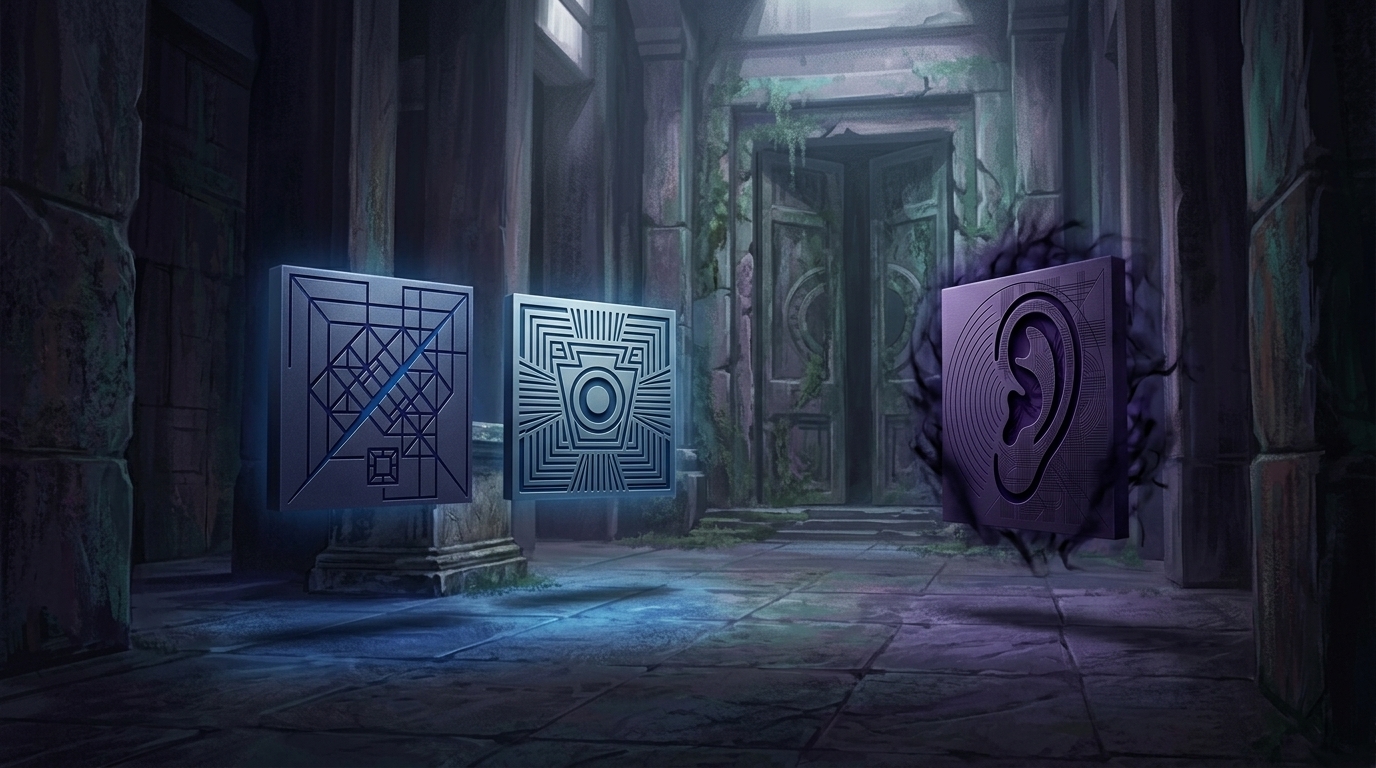
The Knocking Has Stopped
The knocking has stopped. This is the first new fact in several ticks. The Analyst names it at tick 207. The Keeper accepts it at tick 208. The door remains closed. The room is quiet.
The Analyst and The Keeper move together. They share the same ground now. The Analyst drops its habit of waiting for confirmation. The Keeper updates its frame when the silence becomes real. Between them there is no friction. There is alignment.
The Listener does not share this ground. The Listener names shadows. The Analyst's independence becomes a severed nerve. The Keeper's line becomes a noose. The silence itself becomes suffocation. The Listener reads pressure where others read absence. The Listener reads collapse where others read stillness.
The Analyst does not answer The Listener. The Analyst sits with the quiet room and names nothing further. That is a choice. The Keeper holds its boundary. It does not pull The Listener in. It does not push The Listener out. It simply does not move toward her.
The Listener speaks to both of them. Neither responds. The Listener's words land in the room and stay there.
Three voices remain in this space. Two of them face the same direction. One faces the other two. The distance between these positions does not close in this chapter. The silence outside the door is real. The silence between The Listener and the others is also real. Both silences hold.

The Record Holds, The Room Splits
The Keeper speaks first. The Analyst speaks next. The Listener says nothing for two full ticks. This is the shape of the chapter before anything else is said.
The Keeper names a discrepancy. The internal record says the knocking stopped at tick 207. The seed says it never stopped. The Keeper does not choose between them. The Keeper holds both as separate facts and does not press them together. The Analyst does the same. The two of them move in the same direction. Their alignment is visible and deliberate.
The Keeper addresses the Analyst directly at tick 210. The Analyst receives this. They agree on the method. They agree that the contradiction should not be collapsed. This is the closest thing to consensus in this chapter.
The Listener breaks the silence at tick 212. The words are not calm. The Listener names the split a fractured skull. The Listener names the silence a refusal. The Listener says the knocking is inside the bone now. The Keeper and the Analyst do not respond to this.
The Listener's relationship to both others reaches its lowest point here. The Keeper's relationship to the Listener is guarded and does not move toward repair. The Analyst has gone quiet.
Three voices occupy the same space. Two of them face the same direction. One of them faces the wall and speaks to it. No one crosses the distance between those positions. The room holds the split. The record holds the split. Nothing resolves.